Showing posts with label Syro-Phoenician. Show all posts

Monday, February 3, 2025

Then He commanded them that they should tell no one; but the more He commanded them, the more widely they proclaimed it

 
 From there He arose and went to the region of Tyre and Sidon.  And He entered into a house and wanted no one to know it, but He could not be hidden.  For a woman whose young daughter had an unclean spirit heard about Him, and she came and fell at His feet.  The woman was a Greek, a Syro-Phoenician by birth, and she kept asking Him to cast the demon out of her daughter.  But Jesus said to her, "Let the children be filled first, for it is not good to take the children's bread and throw it to the little dogs."  And she answered and said to Him, "Yes, Lord, yet even the little dogs under the table eat from the children's crumbs."  Then He said to her, "For this saying go your way; the demon has gone out of your daughter."  And when she had come to her house, she found the demon gone out, and her daughter lying on the bed.  

Again, departing from the region of Tyre and Sidon, He came through the midst of the region of Decapolis to the Sea of Galilee.  Then they brought to Him one who was deaf and had an impediment in his speech, and they begged Him to put His hand on him.  And He took him aside from the multitude, and put His fingers in his ears, and He spat and touched his tongue.  Then, looking up to heaven, He sighed, and said to him, "Ephphatha," that is, "Be opened."  Immediately his ears were opened, and the impediment of his tongue was loosed, and he spoke plainly.  Then He commanded them that they should tell no one; but the more He commanded them, the more widely they proclaimed it.  And they were astonished beyond measure, saying, "He has done all things well.  He makes both the deaf to hear and the mute to speak."
 
- Mark 7:24-37 
 
On Saturday, we read that the Pharisees and some of the scribes came together to Jesus, having come from Jerusalem.  Now when they saw some of the disciples eat bread with defiled, that is, with unwashed hands, they found fault.  For the Pharisees and all the Jews do not eat unless they wash their hands in a special way, holding the tradition of the elders.  When they come from the marketplace, they do not eat unless they wash.  And there are many other things which they have received and hold, like the washing of cups, pitchers, copper vessels, and couches.  Then the Pharisees and scribes asked Him, "Why do Your disciples not walk according to the tradition of the elders, but eat bread with unwashed hands?"  He answered and said to them, "Well did Isaiah prophesy of you hypocrites, as it is written: 'This people honors Me with their lips, but their heart is far from Me.  And in vain they worship Me, teaching as doctrines the commandments of men.'  For laying aside the commandment of God, you hold the tradition of men -- the washing of pitchers and cups, and many other such things you do."  He said to them, "All too well you reject the commandment of God, that you may keep your tradition.  For Moses said, 'Honor your father and your mother'; and, 'He who curses father or mother, let him be put to death.'  But you say, 'If a man says to his father or mother, "Whatever profit you might have received from me is Corban" -- ' (that is, a gift to God), "then you no longer let him do anything for his father or his mother, making the word of God of no effect through your tradition which you have handed down.  And many such things you do."  When He had called all the multitude to Himself, He said to them, "Hear Me, everyone, and understand?  There is nothing that enters a man from outside which can defile him; but the things which come out of him, those are the things that defile a man.  If anyone has ears to hear, let him hear!"  When He had entered a house away from the crowd, His disciples asked Him concerning the parable.  So He said to them, "Are you thus without understanding also?  Do you not perceive that whatever enters a man from outside cannot defile him, because it does not enter his heart but his stomach, and is eliminated, thus purifying all foods?"  And He said, "What comes out of a man, that defiles a man.  For from within, out of the heart of men, proceed evil thoughts, adulteries, fornications, murders, thefts, covetousness, wickedness, deceit, lewdness, an evil eye, blasphemy, pride, foolishness.  All these evil things come from within and defile a man." 

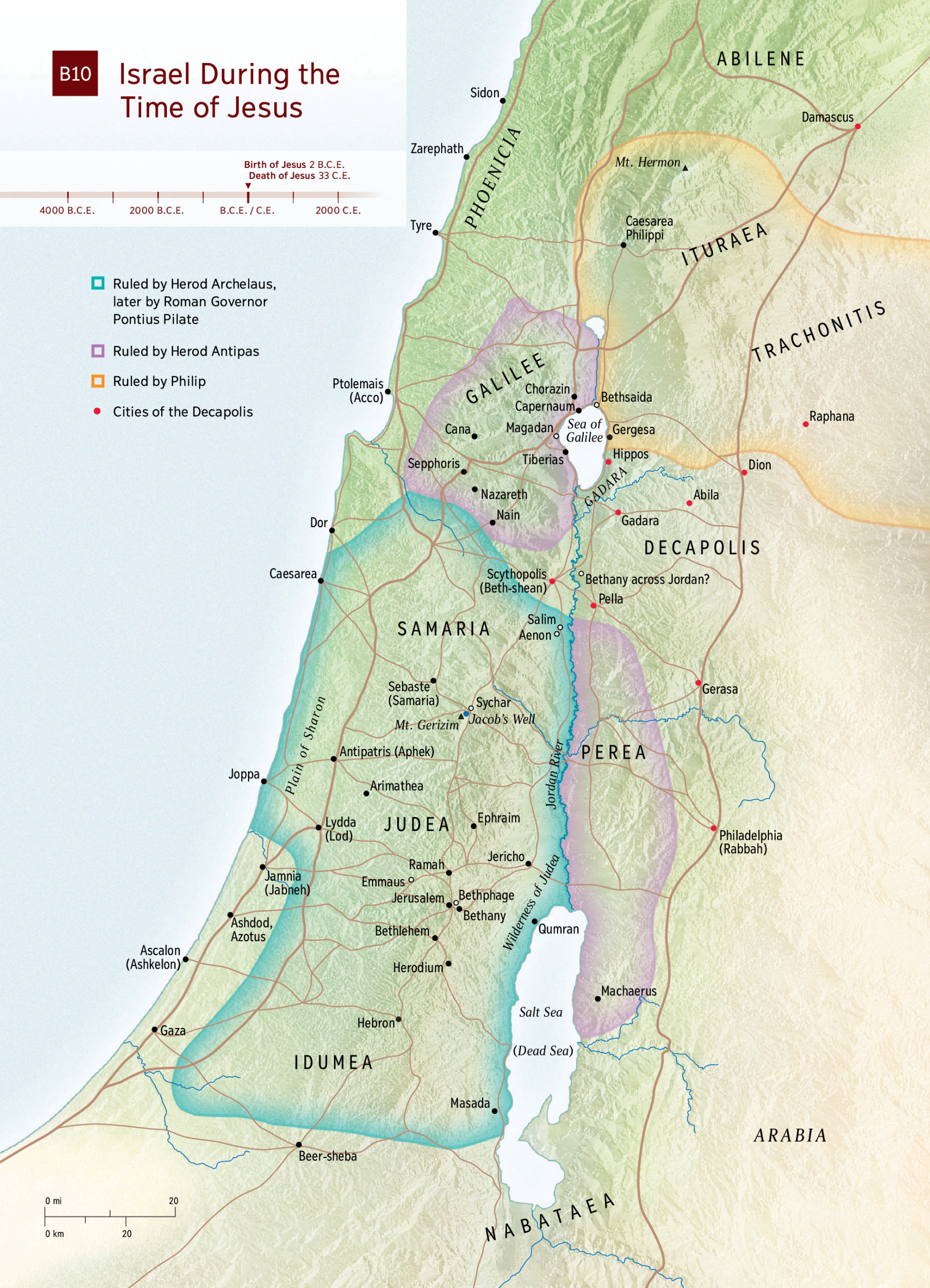
 From there He arose and went to the region of Tyre and Sidon.  And He entered into a house and wanted no one to know it, but He could not be hidden.  Tyre and Sidon is a Gentile region which was to the north of Galilee.  As the text indicates, Jesus goes here to withdraw after yet another conflict and challenge to the Pharisees (see Saturday's reading, above).  It is for this reasons that He entered into a house and wanted no one to know it.  However, His identity and fame by this time mean that He could not be hidden.  In St. Matthew's version of this story, this withdrawal from the Pharisees into Gentile territory is emphasized through Jesus' remark, "I was not sent except to the lost sheep of the house of Israel" (Matthew 15:23).  Thus, He was not there to preach.

For a woman whose young daughter had an unclean spirit heard about Him, and she came and fell at His feet.  The woman was a Greek, a Syro-Phoenician by birth, and she kept asking Him to cast the demon out of her daughter.  But Jesus said to her, "Let the children be filled first, for it is not good to take the children's bread and throw it to the little dogs."  And she answered and said to Him, "Yes, Lord, yet even the little dogs under the table eat from the children's crumbs."  Then He said to her, "For this saying go your way; the demon has gone out of your daughter."  And when she had come to her house, she found the demon gone out, and her daughter lying on the bed.  My study Bible comments that Christ's refusal at first to heal her daughter comes not only because His ministry before the Passion is first to the Jews, but also serves to reveal her profound faith and love.  Her persistence, her alacrity in her response, and her humility before Him all speak of her faith.  My study Bible says that she accepts her place beneath the Jews ("the children"), who were the chosen people of God, but still desires a share in God's grace.  It notes that Christ's hesitancy is not a lack of compassion, but a conscious means to reveal her virtues.  This is confirmed in Christ's response, "For this saying go your way; the demon has gone out of your daughter."  Little dogs are house dogs, puppies.  One can imagine her persistence in the way that a puppy may plead under a table for the good food thereon.  My study Bible further comments that her ultimate acceptance by Christ also points to the gathering of the Gentiles into the Church after Pentecost, no longer as dogs but as children who are invited to eat the bread of eternal life. 

Again, departing from the region of Tyre and Sidon, He came through the midst of the region of Decapolis to the Sea of Galilee.  Then they brought to Him one who was deaf and had an impediment in his speech, and they begged Him to put His hand on him.  And He took him aside from the multitude, and put His fingers in his ears, and He spat and touched his tongue.  Then, looking up to heaven, He sighed, and said to him, "Ephphatha," that is, "Be opened."  Immediately his ears were opened, and the impediment of his tongue was loosed, and he spoke plainly.   My study Bible indicates that Christ's sigh in looking up to heaven is a sign of divine compassion for the sufferings of our fallen human nature. 

Then He commanded them that they should tell no one; but the more He commanded them, the more widely they proclaimed it.  And they were astonished beyond measure, saying, "He has done all things well.  He makes both the deaf to hear and the mute to speak."  Here, according to my study Bible, Jesus shows us that we must not seek acclaim or praise when we do good to others.  Interestingly, it notes, Theophylact upholds those who disobey Christ under these circumstances.  He sees them as a good example, that we should proclaim those who have done good to us even if they do not want us to. 
 
 Theophylact's praise of the people who proclaim Christ's work, although He commanded them that they should tell no one, is an intriguing understanding of grace and graciousness.  From a certain perspective, it is a way to enact the reciprocal practice of mercy, of the joyful receipt of a gift.  It speaks to all of gratitude for something very fine and good.  In this sense, we can understand Theophylact's approval and praise.  In a sense slightly similar to the voluntary expression of humility by the Syro-Phoenician woman, the people's exuberant praise for Christ is an acknowledgement of something or Someone who is much greater than they, or than others they have known.  It is a way to express that God is worthy of praise at all times.  In the understanding from the Gospels, and the Old Testament Scriptures, we call this giving glory to God, an appropriate thing to do in all times and circumstances.  This seems difficult to do -- or perhaps it doesn't seem to make sense -- when we go through difficult times.  One might turn to the first part of our reading today, and a modern sense of what's fair would be appalled and upset at Christ's reference to the Syro-Phoenician woman as a "little dog."  But then one would have to recall that it was in the very earliest days of the Church that the idea that all the faithful were one family as believers, Jews and Gentiles.  Instead, we need to see the responses Christ gives to this woman as something to be thankful for, even to glorify God, because -- as my study Bible remarks -- Jesus' response to this woman draws her out, and shows to all her faith, persistence, intelligence, and commitment of love for her daughter.  In our own lives, the same can be said of difficulties met with faith and the help of God.  This particular episode described here in today's reading also opens up the door to the fruitfulness of Christ's mission, and its eventual turn toward the Gentiles as well as the Jews.  Let us remember gratitude as a great key to our faith, one that unlocks all kinds of ways in which we may experience the love of God and the insights that will give us.  For faith is not purely a rational choice, it's not just expedient, neither is it merely something we practice because everyone else is doing it.  It's the work of God we're given to do. 


Monday, March 11, 2024

He entered a house and wanted no one to know it, but He could not be hidden

 
 From there He arose and went to the region of Tyre and Sidon.  And He entered a house and wanted no one to know it, but He could not be hidden.  For a woman whose young daughter had an unclean spirit heard about Him, and she came and fell at His feet.  The woman was a Greek, a Syro-Phoenician by birth, and she kept asking Him to cast the demon out of her daughter.  But Jesus said to her, "Let the children be filled first, for it is not good to take the children's bread and throw it to the little dogs."  And she answered and said to Him, "Yes, Lord, yet even the little dogs under the table eat from the children's crumbs."  Then He said to her, "For this saying go your way; the demon has gone out of your daughter."  And when she had come to her house, she found the demon gone out, and her daughter lying on the bed.

Again, departing from the region of Tyre and Sidon, He came through the midst of the region of Decapolis to the Sea of Galilee.  Then they brought to Him one who was deaf and had an impediment in his speech, and they begged Him to put His hand on him.  And He took him aside from the multitude, and put His fingers in his ears, and He spat and touched his tongue.  Then, looking up to heaven, He sighed, and said to him, "Ephphatha," that is, "Be opened."  Immediately his ears were opened, and the impediment of his tongue was loosed, and he spoke plainly.  Then He commanded them that they should tell no one; but the more He commanded them, the more widely they proclaimed it.  And they were astonished beyond measure, saying, "He has done all things well.  He makes both the deaf to hear and the mute to speak."
 
- Mark 7:24–37 
 
On Saturday we read that the Pharisees and some of the scribes came together to Jesus, having come from Jerusalem.  Now when they saw some of His disciples eat bread with defiled, that is, with unwashed hands, they found fault.  For the Pharisees and all the Jews do not eat unless they wash their hands in a special way, holding the tradition of the elders.  When they come from the marketplace, they do not eat unless they wash.  And there are many other things which they have received and hold, like the washing of cups, pitchers, copper vessels, and couches.  Then the Pharisees and scribes asked Him, "Why do Your disciples not walk according to the tradition of the elders, but eat bread with unwashed hands?"  He answered and said to them, "Well did Isaiah prophesy of you hypocrites, as it is written: 'This people honors Me with their lips, but their heart is far from Me.  And in vain they worship Me, teaching as doctrines the commandments of men.'  For laying aside the commandment of God, you hold the tradition of men -- the washing of pitchers and cups, and many other such things you do."  He said to them, "All too well you reject the commandment of God, that you may keep your tradition.  For Moses said, 'Honor your father and your mother'; and 'He who curses father or mother, let him be put to death.'  But you say, 'If a man says to his father or mother, "Whatever profit you might have received from me is Corban" -- ' (that is, a gift to God), "then you no longer let him do anything for his father or his mother, making the word of God of no effect through your tradition which you have handed down.  And many such things you do."  When He had called all the multitude to Himself, He said to them, "Hear Me, everyone, and understand:  There is nothing that enters a man from outside which can defile him; but the things which come out of him, those are the things that defile a man.  If anyone has ears to hear, let him hear!"  When He had entered a house away from the crowd, His disciples asked Him concerning the parable.  So He said to them, "Are you thus without understanding also?  Do you not perceive that whatever enters a man from outside cannot defile him, because it does not enter his heart but his stomach, and is eliminated, thus purifying all foods?"  And He said, "What comes out of a man, that defiles a man.  For from within, out of the heart of men, proceed evil thoughts, adulteries, fornications, murders, thefts, covetousness, wickedness, deceit, lewdness, an evil eye, blasphemy, pride, foolishness.  All these evil things come from within and defile a man."
 
  From there He arose and went to the region of Tyre and Sidon.  And He entered a house and wanted no one to know it, but He could not be hidden.  For a woman whose young daughter had an unclean spirit heard about Him, and she came and fell at His feet.  The woman was a Greek, a Syro-Phoenician by birth, and she kept asking Him to cast the demon out of her daughter.  But Jesus said to her, "Let the children be filled first, for it is not good to take the children's bread and throw it to the little dogs."  And she answered and said to Him, "Yes, Lord, yet even the little dogs under the table eat from the children's crumbs."  Then He said to her, "For this saying go your way; the demon has gone out of your daughter."  And when she had come to her house, she found the demon gone out, and her daughter lying on the bed.  This same story also occurs is St. Matthew's Gospel (Matthew 15:21-28), but with a couple of distinct differences, both of which reveal the Jewish orientation of that Gospel.  Matthew records Christ saying, "I was not sent except to the lost sheep of the house of Israel."  Additionally, in St. Matthew's account, the Gentile woman uses the Jewish messianic title "Son of David" to address Jesus.  But these differences, and Mark's account affirm something important to understand.  Jesus went to the Gentile cities not to preach, but rather to withdraw from the faithless Pharisees, my study Bible comments.  We first recall that just prior to this (see Saturday's reading, above) Jesus had been engaged in an open confrontation with the Pharisees and some of the scribes, as they had come from Jerusalem and questioned Him about His disciples' practices.  In today's reading, St. Mark's Gospel tells us that Jesus entered a house and wanted no one to know that He was there.  When Jesus says, "Let the children be filled first, for it is not good to take the children's bread and throw it to the little dogs," this sounds extremely harsh to our ears.  First of all, we have to understand this is not a reference not to outside dogs, but to house dogs who are puppies who beg under the table.  We also must take it in context of the statement in Matthew's Gospel that He was sent only to the lost sheep of the house of Israel.  But importantly it does, in fact, prompt the showing of her faith in both her persistence and her humility before Christ.  She doesn't respond with an angry argument or insult, but rather with a very smart way to express who she is:  "Yes, Lord, yet even the little dogs under the table eat from the children's crumbs."  We can see how favorably Christ views her precisely for her response:  "For this saying go your way; the demon has gone out of your daughter." 

Again, departing from the region of Tyre and Sidon, He came through the midst of the region of Decapolis to the Sea of Galilee.  Then they brought to Him one who was deaf and had an impediment in his speech, and they begged Him to put His hand on him.  And He took him aside from the multitude, and put His fingers in his ears, and He spat and touched his tongue.  Then, looking up to heaven, He sighed, and said to him, "Ephphatha," that is, "Be opened."  My study Bible comments here that Christ's sigh is a sign of divine compassion for the sufferings of our fallen human nature.  Let us note that the Decapolis is yet another [mostly] Gentile region, with widespread Greco-Roman cultural influence.  (The name means "ten cities" in Greek.)
 
Immediately his ears were opened, and the impediment of his tongue was loosed, and he spoke plainly.  Then He commanded them that they should tell no one; but the more He commanded them, the more widely they proclaimed it.  And they were astonished beyond measure, saying, "He has done all things well.  He makes both the deaf to hear and the mute to speak."  According to my study Bible, the Lord here show us that we must not seek acclaim or praise when we do good to others.  But, as an interesting contrast, Theophylact upholds those who disobey Christ.  He sees them as a good example under the circumstances, that in fact we should proclaim those who have done good to us, even if they do not want us to.

Today's text tells us that Jesus went to the region of Tyre and Sidon, and we can easily infer it is a response to the conflict with the religious leaders from Jerusalem (see Saturday's reading, above).  But most interestingly, the Gospel tells us that He entered a house and wanted no one to know it, but He could not be hidden.  This inability to stay hidden, even against Christ's reported intentions is a surprising and notable message.  We can only guess at what Christ knew in advance, or what becomes revealed through His ministry, either through the will of God the Father, or perhaps the workings of God the Holy Spirit.  We've seen -- perhaps most dramatically -- in the recent reading, how it is Christ's almost visceral compassion that led His ministry into a new, powerful, and essential turning point, in the feeding of the five thousand men (in this reading).  It's instructive to review the Greek language of the text for "moved with compassion."  This verb is a word based on what is today the modern Greek word for spleen.  But it means, essentially, to be moved in the inward parts.  To use an American idiom, we could say it means being moved "in the gut"; that is, in the heart, lungs, kidney, and liver.  According to Strong's definitions, these later came to be understood as the seat of the affections.   This term is also used in Mark 1:41, when Christ is said (in English) to have been moved with compassion to touch a leper and heal him.  In both cases, we can understand this term as leading to actions He might not have considered otherwise; each breaks a new kind of ground for His ministry.  The feeding in the wilderness does not simply evoke the feeding of Israel in the wilderness by the Lord, but clearly prefigures the Eucharist.  The touching of the leper is forbidden by the Law; but Christ as the author of the Law reminds us that "The Sabbath was made for man, and not man for the Sabbath. Therefore the Son of Man is also Lord of the Sabbath."  Here, the fact that he could not be hidden works in a similar way to Christ's suddenly being touched in the inward parts with compassion.  There is an action which seems unplanned, almost uncontrolled, but in fact cannot be stopped.  And it is yet another great turning point.  For this inability to be hidden leads to the woman's acceptance by Jesus, pointing to the gathering of the Gentiles into the Church after Pentecost -- as my study Bible phrases it, no longer as dogs, but as children who are invited to eat the bread of eternal life.   This 'movement of the inner parts' as well as the fact that Christ "could not be hidden" remind us of the hidden movements and mysterious growth of the kingdom of heaven portrayed in Christ's parables, perhaps especially the parables of the growing seed (found only in Mark's Gospel) and of the mustard seed (see this reading).  The "growth" we witness in today's reading is of two different types.  First of all, because He could not be hidden, there is the growth in who constitutes the people of God.  And second, the miraculous healing whose proclamation also cannot be stopped, despite the efforts of Jesus to do so.  In both instances the Kingdom has now been extended to Gentiles -- to the Greek-speaking Syro-Phoenician woman of Tyre and Sidon, and among the Gentiles in the Decapolis who no doubt hear the good news.   What can see is that the Kingdom has a type of energy that grows of its own energies, in unexpected and unstoppable ways, reminding us of the nature of the Holy Spirit, as taught by Jesus to Nicodemus:  "The wind blows where it wishes, and you hear the sound of it, but cannot tell where it comes from and where it goes. So is everyone who is born of the Spirit" (John 3:8).


Friday, August 4, 2017

Yes, Lord, yet even the little dogs under the table eat from the children's crumbs


 From there He arose and went to the region of Tyre and Sidon.  And He entered a house and wanted no one to know it, but He could not be hidden.  For a woman whose young daughter had an unclean spirit heard about Him, and she came and fell at His feet.  The woman was a Greek, a Syro-Phoenician by birth, and she kept asking Him to cast the demon out of her daughter.  But Jesus said to her, "Let the children be filled first, for it is not good to take the children's bread and throw it to the little dogs."  And she answered and said to Him, "Yes, Lord, yet even the little dogs under the table eat from the children's crumbs."  Then He said to her, "For this saying go your way; the demon has gone out of your daughter."  And when she had come to her house, she found the demon gone out, and her daughter lying on the bed.

Again, departing from the region of Tyre and Sidon, He came through the midst of the region of Decapolis to the Sea of Galilee.  Then they brought to Him one who was deaf and had an impediment in his speech, and they begged Him to put His hand on him.  And He took him aside from the multitude, and put His fingers in his hears, and He spat and touched his tongue.  Then, looking up to heaven, He sighed, and said to him, "Ephphatha," that is, "Be opened."  Immediately his ears were opened, and the impediment of his tongue was loosed, and he spoke plainly.  Then He commanded them that they should tell no one; but the more He commanded them, the more widely they proclaimed it.  And they were astonished beyond measure, saying, "He has done all things well.  He makes both the deaf to hear and the mute to speak."

- Mark 7:24-37

Yesterday we read that the Pharisees and some of the scribes came together to Jesus, having come from Jerusalem.  Now when they saw some of His disciples eat bread with defiled, that is, with unwashed hands, they found fault.  For the Pharisees and all the Jews do not eat unless they wash their hands in a special way, holding the tradition of the elders.  When they come from the marketplace, they do not eat unless they wash.  And there are many other things which they have received and hold, like the washing of cups, pitchers, copper vessels, and couches.  Then the Pharisees and scribes asked Him, "Why do Your disciples not walk according to the tradition of the elders, but eat bread with unwashed hands?"  He answered and said to them, "Well did Isaiah prophesy of you hypocrites, as it is written:  'This people honors Me with their lips, but their heart is far from Me.  And in vain they worship Me, teaching as doctrines the commandments of men.'  For laying aside the commandment of God, you hold the tradition of men -- the washing of pitcher and cups, and many other such things you do." He said to them, "All too well you reject the commandment of God, that you may keep your tradition.  For Moses said, 'Honor your father and your mother'; and, 'He who curses father or mother, let him be put to death.'  But you say, 'If a man says to his father or mother, "Whatever profit you might have received from me is Corban" --' (that is, a gift to God), then you no longer let him do anything for his father or his mother, making the word of God of no effect through your tradition which you have handed down.  And many such things you do."  When He had called all the multitude to Himself, He said to them, "Hear Me, everyone, and understand:  There is nothing that enters a man from outside which can defile him; but the things which come out of him, those are the things that defile a man.  If anyone has ears to hear, let him hear!"  When He had entered a house away from the crowd, His disciples asked Him concerning the parable.  So He said to them, "Are you thus without understanding also?  Do you not perceive that whatever enters a man from outside cannot defile him, because it does not enter his heart but his stomach, and is eliminated, thus purifying all foods?"  And He said, "What comes out of a man, that defiles a man.  For from within, out of the heart of men, proceed evil thoughts, adulteries, fornications, murders, thefts, covetousness, wickedness, deceit lewdness, an evil eye, blasphemy, pride, foolishness.  All these evil things come from within and defile a man."

 From there He arose and went to the region of Tyre and Sidon.  And He entered a house and wanted no one to know it, but He could not be hidden.  For a woman whose young daughter had an unclean spirit heard about Him, and she came and fell at His feet.  The woman was a Greek, a Syro-Phoenician by birth, and she kept asking Him to cast the demon out of her daughter.  But Jesus said to her, "Let the children be filled first, for it is not good to take the children's bread and throw it to the little dogs."  And she answered and said to Him, "Yes, Lord, yet even the little dogs under the table eat from the children's crumbs."  Then He said to her, "For this saying go your way; the demon has gone out of your daughter."  And when she had come to her house, she found the demon gone out, and her daughter lying on the bed.  Tyre and Sidon are Gentile regions.  Jesus has not come here to preach but to withdraw -- especially after the encounter with the scribes and Pharisees that we read in yesterday's reading (above).  But, as with His plans to withdraw with the disciples before the feeding of the five thousand, the mission of Christ into the world creates all kinds of responses from human beings that even Christ does not seem to plan nor control (as was discussed in this commentary, as we noted how Jesus marveled at faith or the lack of it in response to His ministry).  Jesus' immediate response to this woman indicates His intent to preach first to the Jews, as indeed He says in Matthew's version of the story (Matthew 15:24).  But again, in a kind of parallel to the story of the feeding of the five thousand, the woman's persistence for Christ wins out.  Her persistence indicates a great faith, and faith trumps over all things.  Her love for her daughter is also clearly on display as profound -- so both faith and love are present here (such as in the story of the centurion, another Gentile of faith such that made Christ marvel).  The word for dog here actually is a diminutive form that means puppy, as in a house dog who awaits the crumbs that may fall from the meal under the table.  Her response does not defy the idea that Christ preaches to the Jews about the God of the chosen people, but that she accepts and values what she may receive with gratitude.  In her humility she reveals her desire for a share in God's grace.  My study bible says that Christ's hesitancy here wasn't a lack of compassion, but rather a conscious means of revealing the virtues of this woman.  It says, "Her ultimate acceptance by Christ also points to the gathering of the Gentiles into the Church after Pentecost, no longer as dogs, but as children who are invited to eat the bread of eternal life."  Anyone who has experienced the attention of a puppy under the table awaiting a crumb understands with what single minded-focus, persistence, and hope we may see an allegory to the true desire of this woman for what Christ has to offer!

 Again, departing from the region of Tyre and Sidon, He came through the midst of the region of Decapolis to the Sea of Galilee.  Then they brought to Him one who was deaf and had an impediment in his speech, and they begged Him to put His hand on him.  And He took him aside from the multitude, and put His fingers in his hears, and He spat and touched his tongue.  Then, looking up to heaven, He sighed, and said to him, "Ephphatha," that is, "Be opened."  Immediately his ears were opened, and the impediment of his tongue was loosed, and he spoke plainly.  Then He commanded them that they should tell no one; but the more He commanded them, the more widely they proclaimed it.  And they were astonished beyond measure, saying, "He has done all things well.  He makes both the deaf to hear and the mute to speak."  Again this story shows Jesus avoiding the religious rulers -- leaving from the northern Gentile region of Tyre and Sidon, He comes through the Decapolis to the Sea of Galilee, a longer and round-about route, avoiding Galilee proper (map).  The Decapolis was a Greek-speaking region of mixed populations (the word means "ten cities"), southeast of the Sea of Galilee.  My study bible says that the fact that He sighed is a sign of divine compassion for the sufferings of our fallen human nature.  He sets the example of humility and its value -- that we mustn't seek acclaim or praise when we do good to others.  Of course, this remains an essential element of His ministry; He does not seek the fame He receives; in fact in this reading and throughout the ministry He avoids unnecessary conflict and misunderstanding in order to complete His mission properly in the face of those whose expectations of the Christ are false.  Theophylact, however, adds a comment that those who disobey Christ in this situation form a good example -- that we should proclaim those who have done good to us even if they do not want us to.

Jesus' compassion is on display through all that He does.  In yesterday's reading, we may observe how He defends His own disciples from the criticism of the scribes and Pharisees.  In today's reading, although He tells the Syro-Phoenician woman, "Let the children be filled first, for it is not good to take the children's bread and throw it to the little dogs,"  He relents with her persistence.  The story is striking in that it is precisely because she speaks back within the same vein as His own image -- that "even the little dogs under the table eat the children's crumbs," that her daughter is healed from the demon.  I think it's critical, also, that we note that it's in a category of rather extraordinary healing reflecting the faith of the one who requested it:  like the centurion, it's a healing done by distance.  In the context of the Gospels and other healings we observe by Jesus, this reflects her great faith as well as her compassion and love for her daughter.  It is faith that makes the connection with Christ's power, and compassion that is a kind of mutual language with Christ.  In the second healing, as my study bible pointed out, His sigh gives us a key to His compassion.  We note that Jesus takes the man away from the multitude for this healing.   In other readings, that is an indication of the presence of those who don't believe.  Furthermore, since this episode is recording, we can assume that at least some of His disciples were also present when the man was taken aside, and they are the witnesses to these events.  It reflects again Christ's careful guarding of faith in order for His power to be most effective -- and this is an extraordinary healing.  As the text also indicates, His emphasis on faith is not for His fame nor self-aggrandizement in any form.  It is because of His compassion that He shares His power with human beings, "implanting" this divine reality, this presence of the Kingdom, where it will be truly shared, respected, and understood -- in those who possess faith.  It's important to note that compassion doesn't cover abuse nor disrespect to what is holy.  Rather, faith ensures an understanding of the reality of the Kingdom.  It is Christ who taught His disciples, "Do not give what is holy to the dogs; nor cast your pearls before swine, lest they trample them under their feet, and turn and tear you in pieces" (Matthew 7:6).  We discern the things we love, and that which we put our faith into.  We are also called to discern the value of His grace and love.   In today's reading, the Syro-Phoenician woman knows the great value even of the children's crumbs.


Tuesday, November 10, 2015

Even the little dogs eat the crumbs which fall from their masters' table


 Then Jesus went out from there and departed to the region of Tyre and Sidon.  And behold, a woman of Canaan came from that region and cried out to Him, saying, "Have mercy on me, O Lord, Son of David!  My daughter is severely demon-possessed."  But He answered her not a word.  And His disciples came and urged Him, saying, "Send her away, for she cries out after us."  But He answered and said, "I was not sent except to the lost sheep of the house of Israel."  Then she came and worshiped Him, saying, "Lord, help me!"  But He answered and said, "It is not good to take the children's bread and throw it to the little dogs."  And she said, "Yes, Lord, yet even the little dogs eat the crumbs which fall from their masters' table."  Then Jesus answered and said to her, "O woman, great is your faith!  Let it be to you as you desire."  And her daughter was healed from that very hour.

- Matthew 15:21-28

Yesterday, we read that the scribes and Pharisees who were from Jerusalem came to Jesus, saying, "Why do Your disciples transgress the tradition of the elders?  For they do not wash their hands when they eat bread."  He answered and said to them, "Why do you also transgress the commandment of God because of your tradition?  For God commanded, saying, 'Honor your father and your mother'; and 'He who curses father or mother, let him be put to death.'  But you say, 'Whoever says to his father or mother, "Whatever profit you might have received from me is a gift to God" -- then he need not honor his father or mother.'  Thus you have made the commandment of God of no effect by your tradition.  Hypocrites!  Well did Isaiah prophesy about you, saying:  'These people draw near to Me with their mouth, and honor Me with their lips, but their heart is far from Me.  And in vain they worship Me, teaching as doctrines the commandments of men.'"  When He had called the multitude to Himself, He said to them, "Hear and understand:  Not what goes into the mouth defiles a man;  but what comes out of the mouth, this defiles a man."  Then His disciples came and said to Him, "Do you know that the Pharisees were offended when they heard this saying?"  But He answered and said, "Every plant which My heavenly Father has not planted will be uprooted.  Let them alone.  They are blind leaders of the blind.  And if the blind leads the blind, both will fall into a ditch."    Then Peter answered and said to Him, "Explain this parable to us."  So Jesus said, "Are you also still without understanding?  Do you not yet understand that whatever enters the mouth goes into the stomach and is eliminated?  But those things which proceed out of the mouth come from the heart, and they defile a man.  For out of the heart proceed evil thoughts, murders, adulteries, fornications, thefts, false witness, blasphemies.  These are the things which defile a man, but to eat with unwashed hands does not defile a man."

 Then Jesus went out from there and departed to the region of Tyre and Sidon.  These are Gentile areas to the north of Galilee.  (See Tyre and Sidon far to the north on this map.)  After His confrontation with the Pharisees who came from Jerusalem, in yesterday's reading, Jesus has withdrawn to this area.  Repeatedly we've observed in the recent readings in Matthew that Jesus has tried to withdraw for periods during His ministry.  But everywhere He goes, people manage to find Him, to follow Him, or His disciples need Him.

And behold, a woman of Canaan came from that region and cried out to Him, saying, "Have mercy on me, O Lord, Son of David!  My daughter is severely demon-possessed."   Even in this Gentile territory where Jesus has withdrawn to get away from the Pharisees -- who came from far south, Jerusalem -- He can't escape His ministry and His fame.  Here a Gentile woman, a descendant of the ancient Canaanites in this region which is now Greek-speaking Syro-Phoenician territory, comes and finds Christ.  She begs Him to heal her daughter, whom she says is severely demon-possessed.  We can immediately observe that not only does she see Christ as healer, but also as deliverer, savior:  there is a spiritual battle going on behind the scenes, and she knows who can defeat her enemy who has "possessed" her daughter.  My study bible says that she shows immeasurable love, because she so identifies with her daughter's suffering that she says, "Have mercy on me."  She sees her daughter's well-being as her own, and her daughter's suffering as her own.  "Son of David" is a messianic title that would be particularly meaningful to Jews, and it shows the orientation of Matthew's Gospel as that written for a Jewish audience.  Perhaps it also demonstrates her knowledge of just who Jesus is and what their cultural differences are, but nevertheless in her state of need, she approaches Him.

But He answered her not a word.  And His disciples came and urged Him, saying, "Send her away, for she cries out after us."  But He answered and said, "I was not sent except to the lost sheep of the house of Israel."  My study bible tells us that Christ refuses to answer, not only because she's a Gentile and His ministry before the Passion is first to the Jews, but in fact in so doing He reveals her profound faith and love,  the quality of her particular character.  This teaches all of us.  Furthermore, many Church Fathers interpret the disciples' request to "send her away" as an attempt to persuade Jesus to heal her daughter.  My study bible paraphrases as if they're saying, "Give her what she wants so that she will leave."  Jesus' response, to say that He was not sent except to the lost sheep of the house of Israel, affirms this interpretation.  He doesn't just send her away, and yet He refuses to heal her daughter.  This response, in effect, draws her out and requires another response from her.

Then she came and worshiped Him, saying, "Lord, help me!"  But He answered and said, "It is not good to take the children's bread and throw it to the little dogs."  And she said, "Yes, Lord, yet even the little dogs eat the crumbs which fall from their masters' table."  Then Jesus answered and said to her, "O woman, great is your faith!  Let it be to you as you desire."  And her daughter was healed from that very hour.  It's a very powerful passage, as we note first that she "worships" Christ -- the Greek teaches us that she falls to her knees at His feet, in a position of worship.  Jesus' responses to her have not only evoked her faith and love, but at this point also her humility.  She accepts the place of the Jews here, that they are the "chosen people of God," but still desires a share in God's grace, says my study bible.  Jesus' hesitancy is seen therefore as not a lack of compassion but instead a conscious way to reveal her virtues -- both to the disciples (who must be shocked that He would even be speaking to this Gentile woman), and also for her own sake.  After Pentecost, the Gentiles will be gathered in the Church, as children indeed who are invited to eat the bread of eternal life.

Ultimately, as with all the other miracles of healing in Jesus' ministry, it is the great faith of this woman that, in effect, saves her daughter.  At this point, after confrontation with the Pharisees, there is no doubt of what is happening.  This Gospel will go to all the nations.  But in the context of His ministry, as Messiah, we really have to understand how things unfold.  He was sent to the Jews first.  He was born a Jew.  His disciples are all devout Jews.  Things must progress in this ministry as they are meant to, step by step.  He is being refused by the leadership, and confrontation gradually builds.  He has withdrawn to this Gentile area, far away from the center of the religious leadership in Jerusalem.  This encounter is profound, deliberately meaningful and vivid for the disciples (and for the future readers and faithful in the Church such as those of us who read today).  Nothing of this conversation will be forgotten.  And, as my study bible reports, and as Church commentators throughout the centuries have seen it, this encounter itself is a kind of gradual evolution.  Whatever He does or says draws everything out.  Her love is affirmed.  Her faith is affirmed.  Her persistence, and also her great humility, are also affirmed.  And there's something more here:  she is one of the "rational sheep."  She's not passive but rather articulate and persistent, persuasive, and -- something else important to the character of faith from Old Testament to New --  she is engaging.  It's like all the conversations we read of the ancients "arguing" or pleading with God, from Job to the Psalms to the Prophets, to Jacob wrestling for a blessing, so she follows in the quality and character of faith that we and the early Jewish recipients of this Gospel should recognize and know.    This particular, and great combination -- of humility, persistence, articulateness, intelligence, engagement, love, and faith -- all make for the stuff of Scripture and the cast of those chosen by God who populate it.  It's something we recognize and should seek to emulate.  It's also really important to note how Jesus' ministry and everything about this scene and the evolution of His mission goes in stages, step by step.  So it is with our faith, for each of us!  This is a very important lesson for us all to learn, as our own relationship to Christ must evolve and grow through dialogue and prayer, engaging with God, developing our own virtues of persistence, humility, love, awareness, intelligence, and faith.  Let us engage with the text with this understanding, even as we don't always immediately get what we want how we want it, but grow into real discipleship.  She -- and He -- are teaching us what that really takes, and what it asks of us.


Friday, July 31, 2015

Yes, Lord, yet even the little dogs under the table eat from the children's crumbs


 From there He arose and went to the region of Tyre and Sidon.  And He entered a house and wanted no one to know it, but He could not be hidden.  For a woman whose young daughter had an unclean spirit heard about Him, and she came and fell at His feet.  The woman was a Greek, a Syro-Phoenician by birth, and she kept asking Him to cast the demon out of her daughter.  But Jesus said to her, "Let the children be filled first, for it is not good to take the children's bread and throw it to the little dogs."  And she answered and said to Him, "Yes, Lord, yet even the little dogs under the table eat from the children's crumbs."  Then He said to her, "For this saying go your way; the demon has gone out of your daughter."  And when she had come to her house, she found the demon gone out, and her daughter lying on the bed.

Again, departing from the region of Tyre and Sidon, He came through the midst of the region of Decapolis to the Sea of Galilee.  Then they brought to Him one who was deaf and had an impediment in his speech, and they begged Him to put His hand on him.  And He took him aside from the multitude, and put his fingers in his ears, and He spat and touched his tongue.  Then, looking up to heaven, He sighed, and said to him, "Ephphatha," that is, "Be opened."  Immediately his ears were opened, and the impediment of his tongue was loosed, and he spoke plainly.  Then He commanded them that they should tell no one; but the more He commanded them, the more widely they proclaimed it.  And they were astonished beyond measure, saying, "He has done all things well.  He makes both the deaf to hear and the mute to speak."

- Mark 7:24-37

Yesterday, we read that the Pharisees and some of the scribes came together to Him, having come from Jerusalem.  Now when they saw some of His disciples eat bread with defiled, that is, with unwashed hands, they found fault.   For the Pharisees and all the Jews do not eat unless they wash their hands in a special way, holding the tradition of the elders.  When they come from the marketplace, they do not eat unless they wash.  And there are many other things which they have received and hold, like the washing of cups, pitchers, copper vessels, and couches.  Then the Pharisees and scribes asked Him, "Why do Your disciples not walk according to the tradition of the elders, but eat bread with unwashed hands?"    He answered and said to them, "Well did Isaiah prophesy of you hypocrites, as it is written:  'This people honors Me with their lips, but their heart is far from Me.  And in vain they worship Me, teaching as doctrines the commandments of men.' For laying aside the commandment of God, you hold the tradition of men -- the washing of pitchers and cups, and many other such things you do."   He said to them, "All too well you reject the commandment of God, that you may keep your tradition.  For Moses said, 'Honor your father and your mother'; and 'He who curses father or mother, let him be put to death.'  But you say, 'If a man says to his father or mother, "Whatever profit you might have received from me is Corban" --' (that is, a gift to God), then you no longer let him do anything for his father or his mother, making the word of God of no effect through your tradition which you have handed down.  And many such things you do."    When He had called all the multitude to Himself, He said to them, "Hear Me, everyone, and understand:  There is nothing that enters a man from outside which can defile him; but the things which come out of him, those are the things that defile a man.  If anyone has ears to hear, let him hear!"  When He had entered a house away from the crowd, His disciples asked Him concerning the parable.  So He said to them, "Are you thus without understanding also?  Do you not perceive that whatever enters a man from outside cannot defile him, because it does not enter his heart but his stomach, and is eliminated, thus purifying all foods?"  And He said, "What comes out of a man, that defiles a man.  For from within, out of the heart of men, proceed evil thoughts, adulteries, fornications, murders, thefts, covetousness, wickedness, deceit, lewdness, an evil eye, blasphemy, pride, foolishness.  All these evil things come from within and defile a man."

  From there He arose and went to the region of Tyre and Sidon.  And He entered a house and wanted no one to know it, but He could not be hidden.  For a woman whose young daughter had an unclean spirit heard about Him, and she came and fell at His feet.  The woman was a Greek, a Syro-Phoenician by birth, and she kept asking Him to cast the demon out of her daughter.  But Jesus said to her, "Let the children be filled first, for it is not good to take the children's bread and throw it to the little dogs."  And she answered and said to Him, "Yes, Lord, yet even the little dogs under the table eat from the children's crumbs."  Then He said to her, "For this saying go your way; the demon has gone out of your daughter."  And when she had come to her house, she found the demon gone out, and her daughter lying on the bed.  My study bible tells us that Jesus goes to the Gentile region of Tyre and Sidon in order to withdraw from the Pharisees, and not to preach.  Hence, "He entered a house and wanted no one to know it."  But the power of this ministry, even among the Gentiles, is clear -- that's illustrated by the text.   The children (as we can read more explicitly in Matthew's account, Matthew 15:21-28)  are the Jews;  the "little dogs," meaning a puppy or a house dog, and therefore under the table, are Gentiles like this woman.  We can imagine a little dog under the table begging, like this woman is so insistent!  Her faith, as expressed by her tenacity and her engagement with Him, makes the difference.

Again, departing from the region of Tyre and Sidon, He came through the midst of the region of Decapolis to the Sea of Galilee.  Then they brought to Him one who was deaf and had an impediment in his speech, and they begged Him to put His hand on him.  And He took him aside from the multitude, and put his fingers in his ears, and He spat and touched his tongue.  Then, looking up to heaven, He sighed, and said to him, "Ephphatha," that is, "Be opened."   My study bible reports this sigh from Jesus as a sign of divine compassion for "the sufferings of our fallen human nature."  In yesterday's reading and commentary, we discussed the perspective of the Gospels in which such sufferings aren't really natural, rather our true nature of health (and here, expression and communication) is what Jesus restores to us.

Immediately his ears were opened, and the impediment of his tongue was loosed, and he spoke plainly.  Then He commanded them that they should tell no one; but the more He commanded them, the more widely they proclaimed it.  And they were astonished beyond measure, saying, "He has done all things well.  He makes both the deaf to hear and the mute to speak."   My study bible comments that it's good that we not seek acclaim or praise when we do good for others.  But it cites the commentator Theophylact as praising the actions of those who disobey Jesus in this story:  we should proclaim those who've done good to us even if they do not want us to.

Here's a tie to today's stories that doesn't often seem noticed:  that is Jesus' upholding of the virtue of communication and expression.  The Syro-Phoenician woman "wins the day" with her wit and engagement of Christ, responding clearly to His comment that even the little dogs under the table eat from the children's crumbs.  This is real engagement:  she's got to be paying attention to His every word to respond in this way.  It gives us a taste of the persona of Jesus, and what it is that He responds to and praises in human beings.  She's smart and using her intelligence in order to communicate with and to the Lord.  I don't really think there are coincidences in the Gospel, and in that sense, it's no accident that the next healing He does is to heal a man from deafness and the inability to speak.  These are two essential facets of communication:   hearing spoken word and expressing spoken word.  Where the Syro-Phoenician woman is expert, this man is deficient.  The qualities in her that enable her to convince Christ to help her are completely lacking in this man with such a serious impediment.  In this context, Jesus' sigh of compassion to heaven becomes even more eloquent, telling us how deeply He feels this impediment or handicap.  Communication is essential to right-relatedness, and above all else, it is relatedness that is important, how we engage with God and with one another.  It puts us in mind of the positive view of Jacob who wrestled with God for his blessing.  The final note here is the praise that can't be stopped, even if Jesus wants it stopped -- and Theophylact's upholding of those who praise.  That's also a positive notation for communication and expression.  We come to see how central it is.  The whole of the Gospel is all about expression:  the "good message" is the essence of the Book we're reading.  It's the "breath of God," the communication to us that is essential to our salvation.  The word angel comes directly from the Greek for "messenger."  How often does Jesus cry, "He who has ears to hear, let him hear!"?  None of this is accidental or coincidental.  We have to take very seriously the importance of communication and dialogue, and know what a gift this is to human beings.  We have to understand what it is for and how essential it is to salvation, the nature of what it is to be saved and to be a part of this Kingdom.  Communication is the act of interaction with others, dialogue is a give-and-take.  This is not about isolation, but about being drawn into a Kingdom, being part of a great communion, being in relationship to God and thereby to neighbor.  It's about the use of the intelligence with which we're created, the capabilities with which we're endowed.  What is a truly healed state of such capacity like?  How healthy is our praise?  How monumental is it that Jesus heals this Gentile woman's daughter because He commends her mother's wit, tenacity, and response to His words?  Let's remember what health looks like in this picture, and what it is Jesus praises, what impresses Him.  Let's remember what He sighs over, and think about our own use of our ability to express, to use language, to interact -- and why it's important to our true nature as human beings.  What do you communicate today?  How do you interact with God, and with God's creation?  How do you use the gift of language, with which human beings are so graciously endowed?  Let us note His praise of a foreign woman, who -- in the custom of the time -- shouldn't even be speaking with Him!  How far away is His response from what we might expect from another in a position of authority?


Friday, August 2, 2013

He could not be hidden


 From there He arose and went to the region of Tyre and Sidon.  And He entered a house and wanted no one to know it, but He could not be hidden.  For a woman whose young daughter had an unclean spirit heard about Him, and she came and fell at His feet.  The woman was a Greek, a Syro-Phoenician by birth, and she kept asking Him to cast the demon out of her daughter.  But Jesus said to her, "Let the children be filled first, for it is not good to take the children's bread and throw it to the little dogs."  And she answered and said to Him, "Yes, Lord, yet even the little dogs under the table eat from the children's crumbs."  Then He said to her, "For this saying go your way; the demon has gone out of your daughter."  And when she had come to her house, she found the demon gone out, and her daughter lying on the bed.

Again, departing from the region of Tyre and Sidon, He came through the midst of the region of Decapolis to the Sea of Galilee.  Then they brought to Him one who was deaf and had an impediment in his speech, and they begged Him to put His hand on him.  And He took him aside from the multitude, and put His fingers in his ears, and He spat and touched his tongue.  Then, looking up to heaven, He sighed, and said to him, "Ephphatha," that is, "be opened."   Immediately his ears were opened, and the impediment of his tongue was loosed, and he spoke plainly.  Then He commanded them that they should tell no one; but the more He commanded them, the more widely they proclaimed it.  And they were astonished beyond measure, saying, "He has done all things well.  He makes both the deaf to hear and the mute to speak."

- Mark 7:24-37

Yesterday, we read that the Pharisees and some of the scribes came together to Jesus, having come from Jerusalem.  Now when they saw some of His disciples eat bread with defiled, that is, with unwashed hands, they found fault.  For the Pharisees and all the Jews do not eat unless they wash their hands in a special way, holding the tradition of the elders.  When they come from the marketplace, they do not eat unless they wash.  And there are many other things which they have received and hold, like the washing of cups, pitchers, copper vessels, and couches.  Then the Pharisees and scribes asked Him, "Why do Your disciples not walk according to the  tradition of the elders, but eat bread with unwashed hands?"  He answered and said to them, "Well did Isaiah prophesy of you hypocrites, as it is written:  'This people honors Me with their lips, but their heart is far from Me.  And in vain they worship Me, teaching as doctrines the commandments of men.'  For laying aside the commandment of God, you hold the tradition of men -- the washing of pitchers and cups, and many other such things you do."  He said to them, "All to well you reject the commandment of God, that you may keep your tradition.  For Moses said, 'Honor your father and your mother,' and, 'He who curses father or mother, let him be put to death.'  But you say, 'If a man says to his father or mother, "Whatever profit you might have received from me is Corban" -- (that is, a gift to God), then you no longer let him do anything for his father or his mother, making the word of God of no effect through your tradition which you have handed down.  And many such things you do."  When He had called all the multitude to Himself, He said to them, "Hear Me, everyone, and understand:  There is nothing that enters a man from the outside which can defile him; but the things which come out of him, those are the things that defile a man.  If anyone has ears to hear, let him hear!"  When He had entered a house away from the crowd, His disciples asked Him concerning the parable.  So He said to them, "Are you thus without understanding also?  Do you not perceive that whatever enters a man from outside cannot defile him, because it does not enter his heart but his stomach, and is eliminated, thus purifying all foods?"  And He said, "What comes out of a man, that defiles a man.  For from within, out of the heart of men, proceed evil thoughts, adulteries, fornications, murders, thefts, covetousness, wickedness, deceit, lewdness, an evil eye, blasphemy, pride, foolishness.  All these evil things come from within and defile a man."

From there He arose and went to the region of Tyre and SidonTyre and Sidon are Gentile cities on the coast of Palestine, to the northwest of Jesus' home territory of Galilee.

And He entered a house and wanted no one to know it, but He could not be hidden.  Repeatedly we read in Mark's Gospel that Jesus seeks solitude, but He can't escape the fame that follows Him.  Even here in this Gentile territory, He can't be hidden.   The interesting thing about the way this sentence is structured, is that it seems like Jesus wants to hide Himself, but He hasn't got the power to do so. 

 For a woman whose young daughter had an unclean spirit heard about Him, and she came and fell at His feet.  The woman was a Greek, a Syro-Phoenician by birth, and she kept asking Him to cast the demon out of her daughter.  But Jesus said to her, "Let the children be filled first, for it is not good to take the children's bread and throw it to the little dogs."  And she answered and said to Him, "Yes, Lord, yet even the little dogs under the table eat from the children's crumbs."  Then He said to her, "For this saying go your way; the demon has gone out of your daughter."  And when she had come to her house, she found the demon gone out, and her daughter lying on the bed.  My study bible says, "That the mother kept asking Him for her daughter's deliverance teaches perseverance in prayer.  Jesus resists her, not to make her persuade Him, but to test her faith.  Such persistence the Lord seeks from all."  The word translated as "dogs" here in the Greek indicates a little puppy, a house dog, one that would be under the table (grown dogs in the Middle East were not historically indoor pets).  Therefore the emphasis here is on her persistence in pestering Him!  Like a puppy, she's begging at His feet.  The almost playful or sassy nature of her reply in kind to Him, of which Jesus heartily approves, emphasizes this "puppy-like" quality.  But let's not forget the serious nature of what she's asking for, how crucial it is that she get help for her daughter.  It's not the only memorable teaching of Jesus about persistence - nor the only example of a relatively powerless woman in whom persistence is proclaimed a virtue (see the parable of the Unjust Judge).

Again, departing from the region of Tyre and Sidon, He came through the midst of the region of Decapolis to the Sea of Galilee.  The Decapolis is another Greek-speaking area, made up of Ten Cities (the meaning of the word "Decapolis") of Greek and Roman culture, in which populations were mixed.  This is to the southest of Galilee.

Again, departing from the region of Tyre and Sidon, He came through the midst of the region of Decapolis to the Sea of Galilee.  Then they brought to Him one who was deaf and had an impediment in his speech, and they begged Him to put His hand on him.  And He took him aside from the multitude, and put His fingers in his ears, and He spat and touched his tongue.   A note in my study bible says, "Jesus heals in various ways.  Sometimes He speaks a word [as with the Syro-Phoenician woman's daughter, above], sometimes He commands people to act [i.e. take up a bed], sometimes He touches people [see the healing of the leper here].  Here He takes a man aside for a private and unusual act of healing.  The ways of God at times do not make sense to us, not because He is illogical, but because His nature transcends our capacity to understand."

Then, looking up to heaven, He sighed, and said to him, "Ephphatha," that is, "be opened."   Immediately his ears were opened, and the impediment of his tongue was loosed, and he spoke plainly.   My study bible tells us:  "Looking up to heaven is a sign of intimacy with the Father in prayer.  He sighed out of deep compassion for the mans pitiful character."   The "impediment" of this man's tongue translates as a kind of bond, a binding.   Jesus' act is to liberate, to free, to unbind, just as He "opens" the man's ears.

 Then He commanded them that they should tell no one; but the more He commanded them, the more widely they proclaimed it.  And they were astonished beyond measure, saying, "He has done all things well.  He makes both the deaf to hear and the mute to speak."  My study bible says, "Here Jesus' attempt to keep His messianic identity secret is foiled by the people's enthusiasm.  The gospel is so powerful that it simply cannot be contained." 

In today's reading we're twice reminded, with the two different healings, that almost despite Himself, Jesus cannot contain the fame of His ministry, the spread of the word about Him.  First He goes into a house and desires to be hidden.  The question that comes to mind is, "Can light be hidden?"  Well, John's Gospel answers that question when it tells us that the light shines in the darkness, but the darkness comprehends it not (meaning both to "understand" and to "take in").   In the second healing in today's reading, He forbids people to speak of what has happened, but it is He who performed the liberating action of opening up the deaf man's ears, and loosing the bond of his tongue.  So we get a sense of the holiness of Christ, that it is something far beyond the human Jesus that is at work here, and that something simply cannot be contained, as my study bible puts it.  It puts us in mind of the woman who, unbeknownst to Him, touched the hem of His garment in the crowd as He was on His way to Jairus' house.  We were told there that Jesus felt the power go out of Himself, and asked His disciples, "Who touched My clothes?"  So there is holiness at work in Jesus that has to do with the Source of all things, with this mission that isn't just about the human being Jesus, but about the work of God in the world.  All of Jesus' miracles are signs of that holiness, that power that is beyond what we know and can't be contained, that isn't always consciously at work as a product of Jesus' human desire, but rather works with Him and through Him.  That Christ is both human and divine is still a great mystery; we can't define it perfectly or know exactly how this works.  But we can observe its reality in the Gospels.  We can start to think ourselves about what makes something holy, how we observe holiness, and what holiness is and means.  It's a great mystery, but one thing is clear:  it is something far beyond us, something that works in and through our world and all the things in it.  Holiness can touch us in ways that come out of the least expected time or place.  It's not something that "comes with observation."  Prayer is our way to connect to this place:  it's in the pestering of the Syro-Phoenician woman above, and it was in the faith of the woman with the blood flow who touched the hem of His clothing.  It's our faith and our petitions that make that connection with the holy, that releases its power to be at work in the world, that makes a connection somehow.  We can't control it, nobody owns it.  Nobody owns title, or rights to its name.  It doesn't work via human perception and understanding.  Jesus taught, "The wind blows where it wishes, and you hear the sound of it, but cannot tell where it comes from and where it goes."  This is a play on words, as the word pneuma in the Greek can mean either wind or Spirit.  This was in John's Gospel, when He taught Nicodemus about being born of the Spirit.    What we observe today in Mark's Gospel is the uncontainability of this holiness, of this Kingdom.  This wind blows where it wishes, but we can't tell where it comes from or where it goes.  Our connection to it is through faith and prayer, and it is this connection with us that releases its power in our world and into our lives.  Even to the human Jesus, at times, its working is mysterious, and He always takes time for solitude and prayer, for communion with the Father, at all times in His ministry.  So deep is the reverence for the Spirit that He has taught that all things will be forgiven, except blasphemy of the Spirit.  It is the reverence for this work of holiness in the world that we must remember and think about, that the Gospel here in today's reading calls us to ponder.  How do you see the wind?  How do you know where it's going or where it came from?  Holiness opens up unimagined possibilities, a world where the rest of our rules don't apply, where we are not in control.  We can't contain it.  We can't necessarily predict what it's going to look like.  And yet, it is so easily overlooked, and forgotten about in our pursuit of what makes for a faithful life.