Showing posts with label be opened. Show all posts

Monday, March 16, 2026

He entered a house and wanted no one to know it, but He could not be hidden

 
 From there He arose and went to the region of Tyre and Sidon.  And He entered a house and wanted no one to know it, but He could not be hidden.  For a woman whose young daughter had an unclean spirit heard about Him, and she came and fell at His feet.  The woman was Greek, a Syro-Phoenician by birth, and she kept asking Him to cast the demon out of her daughter.  But Jesus said to her, "Let the children be filled first, for it is not good to take the children's bread and throw it to the little dogs."  And she answered and said to Him, "Yes, Lord, yet even the little dogs under the table eat from the children's crumbs."  Then He said to her, "For this saying go your way; the demon has gone out of your daughter."  And when she had come to her house, she found the demon gone out, and her daughter lying on the bed.
 
 Again, departing from the region of Tyre and Sidon, He came through the midst of the region of Decapolis to the Sea of Galilee.  Then they brought to Him one who was deaf and had an impediment in his speech, and they begged Him to put His hand on him.  And He took him aside from the multitude, and put is fingers in his ears, and He spat and touched his tongue.  Then, looking up to heaven, He sighed, and said to him, "Ephphatha," that is, "Be opened."  Immediately his ears were opened, and the impediment of his tongue was loosed, and he spoke plainly.  Then He commanded them that they should tell no one; but the more He commanded them, the more widely they proclaimed it.  And they were astonished beyond measure, saying, "He has done all things well.  He makes both the deaf to hear and the mute to speak."
 
- Mark 7:24–37 
 
 Then the Pharisees and some of the scribes came together to meet Him, having come from Jerusalem.  Now when they saw some of His disciples eat bread with defiled, that is, with unwashed hands, they found fault.  For the Pharisees and all the Jews do not eat unless they wash their hands in a special way, holding the tradition of the elders.  When they come from the marketplace, they do not eat unless they wash.  And there are many other things which they have received and hold, like the washing of cups, pitchers, copper vessels, and couches.  Then the Pharisees and scribes asked Him, "Why do Your disciples not walk according to the tradition of the elders, but eat bread with unwashed hands?"  He answered and said to them, "Well did Isaiah prophesy of you hypocrites, as it is written: 'This people honors Me with their lips, but their heart is far from Me.  And in vain they worship Me, teaching as doctrines the commandments of men.'  For laying aside the commandment of God, you hold the  tradition of men -- the washing of pitchers and cups, and many other such things you do."  He said to them, "All too well you reject the commandments of God, that you may keep your tradition.  For Moses said, 'Honor your father and your mother'; and 'He who curses father or mother, let him be put to death.'  But you say, 'If a man says to his father or mother, 'Whatever profit you might have received from me is Corban" -- ' (that is, a gift to God), "then you no longer let him do anything for his father or mother, making the word of God of no effect through your tradition which you have handed down.  And many such things you do."   When He had called all the multitude to Himself, He said to them, "Hear Me, everyone, and understand:  There is nothing that enters a man which can defile him; but the things which come out of him, those are the things that defile a man.  If anyone has ears to hear, let him hear!"  When He had entered a house away from the crowd, His disciples asked Him concerning the parable.  So He said to them, "Are you thus without understanding also?  Do you not perceive that whatever enters a man from outside cannot defile him, because it does not enter his heart but his stomach, and is eliminated, thus purifying all foods?"  And He said, "What comes out of a man, that defiles a man.  For from within, out of the heart of men, proceed evil thoughts, adulteries, fornications, murders, thefts, covetousness, wickedness, deceit, lewdness, an evil eye, blasphemy, pride, foolishness.  All these evil things come from within and defile a man." 
 
From there He arose and went to the region of Tyre and Sidon.  And He entered a house and wanted no one to know it, but He could not be hidden.  For a woman whose young daughter had an unclean spirit heard about Him, and she came and fell at His feet.  The woman was Greek, a Syro-Phoenician by birth, and she kept asking Him to cast the demon out of her daughter.  But Jesus said to her, "Let the children be filled first, for it is not good to take the children's bread and throw it to the little dogs."  And she answered and said to Him, "Yes, Lord, yet even the little dogs under the table eat from the children's crumbs."  Then He said to her, "For this saying go your way; the demon has gone out of your daughter."  And when she had come to her house, she found the demon gone out, and her daughter lying on the bed.   Here, after another confrontation with the Pharisees and scribes (see above), Jesus has withdrawn to Gentile territory, the region of Tyre and Sidon.  Clearly at this point in His ministry, before the time of "His hour," He has sought to withdraw from the scrutiny of these religious leaders.  But, as the text says, He could not be hidden.  This woman is not Jewish, but nevertheless she recognizes Christ and His authority. (In St. Matthew's Gospel, she calls Him "Son of David," a Jewish title for the Messiah; here she refers to Him as Lord and fell at His feet as if in worship.)  Asking for an exorcism for her daughter, she places her faith in Christ.  My study Bible comments that in responding to Christ, she shows both her persistent faith (she kept asking Him) and her humility.  We must keep in mind that Christ's ministry and that of the apostles initial mission (before Christ's Ascension and the Great Commission) was to "the lost sheep of the house of Israel" (Matthew 10:6, 15:24).  But this is Gentile territory, and this woman is not a Jew.  By responding for the puppies (suggesting persistent begging at the table), or little dogs, she accepts her place after the Jews, who were the chosen people of God, but she still desires a share in God's grace.  My study Bible comments that Christ's hesitancy was not a lack of compassion, but a conscious means of revealing the virtues of this woman, both to the disciples who witness (and in St. Matthew's account, grew tired of her requests), and for her  own sake.
 
  Again, departing from the region of Tyre and Sidon, He came through the midst of the region of Decapolis to the Sea of Galilee.  Again Christ is avoiding the scrutiny put upon Him in regions where He would be more well-known, He returns to the Sea of Galilee via the Decapolis, another nominally Gentile region but with mixed populations of Gentiles and Jews.
 
Then they brought to Him one who was deaf and had an impediment in his speech, and they begged Him to put His hand on him.  And He took him aside from the multitude, and put is fingers in his ears, and He spat and touched his tongue.  Then, looking up to heaven, He sighed, and said to him, "Ephphatha," that is, "Be opened."  Immediately his ears were opened, and the impediment of his tongue was loosed, and he spoke plainly. My study Bible comments on the detail given here that Christ sighed.  It notes that this is a sign of divine compassion for the sufferings of our fallen human nature.
 
  Then He commanded them that they should tell no one; but the more He commanded them, the more widely they proclaimed it.  And they were astonished beyond measure, saying, "He has done all things well.  He makes both the deaf to hear and the mute to speak."  My study Bible says that here, the Lord shows us we must not seek acclaim or praise when we do good to others.  However, interestingly, it notes, Theophylact upholds those who disobey Christ in this situation, seeing them as a good example, that we should proclaim those who have done good to us even if they do not want us to.
 
In today's reading, we are given two instances in which Jesus seeks to avoid public attention, and yet is unable to do so.  In the first instance, He entered a house in the Gentile region called Tyre and Sidon.  The Gospel tells us that He wanted no one to know it, but He could not be hidden.  But somehow, His reputation has preceded Him.  Perhaps His disciples spoke about Him, perhaps there are people in this place who have heard about the signs and healings that follow this Teacher. Whatever way it happens, she believes there's hope for her daughter, who is demon-possessed.  In the account found in St. Matthew's Gospel, she displays her tremendous love for her daughter, because she pleads, "Have mercy on me," and "Lord, help me!" putting herself in her daughter's place (Matthew 15:21-28).  But, as in the healings among the Jews, it's her faith that makes all the difference, combined with her tenacious pleading, and her willing humility before Christ.  What we notice is not so much these attributes that are shared by those who receive Christ's power in other stories in the Gospels, but the unexpected.  Christ wanted to be hidden, but could not be so.  A similar thing happens in the second part of our reading for today, because He still wants to remain "under the radar," so to speak.  But the people who are astonished that He makes the deaf hear and the mute speak (signs of the coming of the Messiah) will not follow His command to speak to no one about what they have seen.  These instances mirror the explosive growth of the Kingdom, but the difference here is that this surprising growth via word of mouth happens even contrary to Jesus' desire and intention, and so perhaps to His surprise.  It is seemingly as if even He cannot predict this extraordinary effect, the ways in which His reputation grows, and the fierce desire people have for His help.  It's like a train racing along although the engineer cannot understand why it doesn't stop.  Of course, since we are speaking about Jesus and His ministry, we don't know exactly how the human Jesus perceives that it's not the time for open confrontation with the authorities and tries to retire a little for a while.  But this growth among even Gentiles is a hint about what is to come after His Ascension and the future of His ministry, and His Church to come.  The Spirit is working, the power of the gospel message is working, the Father is always working (John 5:7).  Christ has a need to understand where His ministry is headed, and how fast, but things unfold in ways that seem to say God the Father is leading Him along, preparing Him, and all things move all the time toward the fullness of the Church which even we, 2,000 years later, have not yet seen.  Sometimes life presents us with turns we don't expect, outcomes that tell us there's something new we need to live with, and to learn how God wants us to approach life as it is now, and this is seemingly also our Lord's messianic journey and ministry.  At each new turn He prays to the Father, and finds where He is to go, His human will always obedient to the Father, even as He remains yet fully the Son.  Notice that Christ's divine power is never used to stop the spread of the gospel, but there are times when it works in particular ways He didn't seem to expect -- such as when a woman touched Him in faith in the midst of a crowd in this reading, or even when He marveled at the unbelief of His neighbors in His hometown of Nazareth and so He could do no mighty work there as He had elsewhere (see this reading).  So, while we cannot fathom the mind of Christ, who was fully human and fully divine, He nonetheless sets an example for us when we encounter surprising turns in our own lives, completely contrary to our own expectations.  For He always turned to prayer, and to the will of God the Father.  In this way, He heals us by being present to us in prayer as well, when we are in our own encounters with the things that baffle us, make us marvel, and don't turn out the ways in which we expected -- or perhaps even counted upon.  Jesus, as one of us, has had His own surprising turns and outcomes, and so He can help us see the way forward through ours. 


Tuesday, September 30, 2025

Ask, and it will be given to you; seek, and you will find; knock, and it will be opened to you

 
 "Judge not, that you be not judged.  For with what judgment you judge, you will be judged; and with the measure you use, it will be measured back to you.  And why do you look at the speck in your brother's eye, but do not consider the plank in your own eye?  Or how can you say to your brother, 'Let me remove the speck from your eye'; and look, a plank is in your own eye?  Hypocrite!  First remove the plank from your own eye, and then you will see clearly to remove the speck from your brother's eye.  
 
"Do not give what is holy to dogs; nor cast your pearls before swine, lest they trample them under their feet, and turn and tear you in pieces. 
 
"Ask, and it will be given to you; seek, and you will find; knock, and it will be opened to you.  For everyone who asks receives, and he who seeks finds, and to him who knocks it will be opened.  Or what man is there among you who, if his son asks for bread, will give him a stone?  Or if he asks for a fish, will he give him a serpent?  If you then, being evil, know how to give good gifts to your children, how much more will your Father who is in heaven give good things to those who ask Him!  Therefore, whatever you want men to do to you, do also to them, for this is the Law and the Prophets."
 
- Matthew 7:-12
 
We are currently reading through the Sermon on the Mount.  Yesterday we read that Jesus taught, "Therefore I say to you, do not worry about your life, what you will eat or what you will drink; nor about your body, what you will put on.  Is not life more than food and the body more than clothing?  Look at the birds of the air, for they neither sow nor reap nor gather into barns; yet your heavenly Father feeds them.  Are you not of more value than they?  Which of you by worrying can add one cubit to his stature?  So why do you worry about clothing?  Consider the lilies of the field, how they grow:  they neither toil nor spin; and yet I say to you that even Solomon in all his glory was not arrayed like one of these.  Now if God so clothes the grass of the field, which today is, and tomorrow is thrown into the oven, will He not much more clothe you, O you of little faith?  Therefore do not worry, saying, 'What shall we eat?' or 'What shall we drink?' or 'What shall we wear?'  For after all these things the Gentiles seek.  For your heavenly Father knows that you need all these things.  But seek first the kingdom of God and His righteousness, and all these things shall be added to you.  Therefore do not worry about tomorrow, for tomorrow will worry about its own things.  Sufficient for the day is its own trouble."
 
 "Judge not, that you be not judged.  For with what judgment you judge, you will be judged; and with the measure you use, it will be measured back to you.  And why do you look at the speck in your brother's eye, but do not consider the plank in your own eye?  Or how can you say to your brother, 'Let me remove the speck from your eye'; and look, a plank is in your own eye?  Hypocrite!  First remove the plank from your own eye, and then you will see clearly to remove the speck from your brother's eye."  My study Bible comments here that we will be judged with our own level of judgment because we are guilty of the very things we judge in others (Romans 2:1).  We ourselves have failed in repentance and in fleeing from sin.  To pass judgment is to assume God's authority.  The phrase "with the measure you use, it will be measured back to you" is also found in Mark 4:24 and Luke 6:38.  Each is used in a different context, and there is no doubt Jesus taught this important message many times.  
 
"Do not give what is holy to dogs; nor cast your pearls before swine, lest they trample them under their feet, and turn and tear you in pieces."  My study Bible says that dogs and swine refer to heathen peoples (Philippians 3:2; Revelation 22:15), but would also include Jews who do not practice virtue.  According to patristic commentary, "dogs" are those so immersed in evil that they show no hope of change, and "swine" are those who habitually live immoral and impure lives.  Pearls are the inner mysteries of the Christian faith, it notes, including Christ's teachings (Matthew 13:46) and the great sacraments.  These holy things are restricted from the immoral and unrepentant.  This is not in order to protect the holy things themselves, as Christ needs no protection.  But we protect faithless people from the condemnation that would result from holding God's mysteries in contempt.  See also Luke 23:8-9 for Jesus' response to Herod's questioning.
 
 "Ask, and it will be given to you; seek, and you will find; knock, and it will be opened to you.  For everyone who asks receives, and he who seeks finds, and to him who knocks it will be opened.  Or what man is there among you who, if his son asks for bread, will give him a stone?  Or if he asks for a fish, will he give him a serpent?  If you then, being evil, know how to give good gifts to your children, how much more will your Father who is in heaven give good things to those who ask Him!"  The verbs ask, seek, and knock are present progressives.  In other words, their effect is to say "be asking," "be seeking," "be knocking."  There is a synergy here which my study Bible cites:  our effort is commanded, but never apart from the immediate help of God.  We ask in prayer, we seek by learning God's truth, and we knock by doing God's will.  My study Bible also comments that people are called evil here not to condemn the whole race of human beings, but to contrast the imperfect goodness that is in people (that is, our goodness is mixed with sin) with the perfect goodness of God (see Matthew 19:16-17).  If imperfect and even wicked people can do some good, so all the more will God work perfect good.  
 
"Therefore, whatever you want men to do to you, do also to them, for this is the Law and the Prophets."  The "Golden Rule" fulfills the demands of the Law and the Prophets, says my study Bible, and it's also a practical application of the commandment to love one's neighbor as oneself (Matthew 22:39-40).  My study Bible calls it a first step in spiritual growth.  It adds that the negative form of the Golden Rule ("Don't do to others what you don't want them to do to you") was well-known in Judaism.  Jesus' form, however, is positive, and this is the action that begins to draw us toward God.  See also Luke 6:31.
 
 In the context of the Sermon on the Mount as a whole, and in particular today's reading, we need to make sense of it in terms of being directed at disciples, those who follow Him.  We're first told, "Judge not, that you be not judged.  For with what judgment you judge, you will be judged; and with the measure you use, it will be measured back to you."  This is another form of the Golden Rule in today's last verse, but applied specifically to judgment.  How do we look at our neighbors, or in particular our fellow disciples of Christ?  We should consider how we wish to be judged, for we will be judged the same way.  It seems to me this is directly invoking how we treat one another.  Jesus goes on, "And why do you look at the speck in your brother's eye, but do not consider the plank in your own eye?  Or how can you say to your brother, 'Let me remove the speck from your eye'; and look, a plank is in your own eye?  Hypocrite!  First remove the plank from your own eye, and then you will see clearly to remove the speck from your brother's eye"  In chapter 18 of St. Matthew's Gospel, Jesus will speak of mutual self-correction in the Church.  This verse reflects this notion of mutual correction as a way of helping with discipleship, and emphasizes the humility necessary to do this appropriately.  In monastic practice, a good elder is one who is experienced spiritually, so that their own knowledge of themselves and their mistakes and corrections can be beneficial to others, and they may correct helpfully and with love and mercy, not the kind of judgment Christ forbids here.  If we're blind to our own errors, we're in no position to help, and will easily practice projection upon others.  In this context we read, "Do not give what is holy to dogs; nor cast your pearls before swine, lest they trample them under their feet, and turn and tear you in pieces."  For a person to benefit from spiritual help, they must be disposed toward acceptance and not rejection.  Even the greatest spiritual treasure may be hated by one who does not wish to accept it.  Jesus then says, "Ask, and it will be given to you; seek, and you will find; knock, and it will be opened to you.  For everyone who asks receives, and he who seeks finds, and to him who knocks it will be opened.  Or what man is there among you who, if his son asks for bread, will give him a stone?  Or if he asks for a fish, will he give him a serpent?  If you then, being evil, know how to give good gifts to your children, how much more will your Father who is in heaven give good things to those who ask Him!"  This is a great exhortation to spiritual growth and discipleship, for it emphasizes the generous nature of God for those who do seek and ask and knock with sincerity.  As my study Bible points out, these are meant to be ongoing always with us; it's a continual pursuit and practice. We keep asking, keep praying, keep knocking through the practices and resources we have in the Church. And the world needs that resource and experience.  Finally, here again is the summing up:  "Therefore, whatever you want men to do to you, do also to them, for this is the Law and the Prophets."  Do you want to learn?  Then help teach.  Do you value kindness, humility, mercy?  Then offer it to others, and in particular we need to model this among the faithful in the ways we treat one another.  Do you wish to gain self-knowledge, spiritual understanding?  Offer what you have, but be properly discerning.  This message of the Golden Rule is a deep emphasis on the communion involved in all of this pursuit of following Christ in discipleship.  God is first of all our Father in heaven, as Jesus references God, so let us understand what we are to be about, all the time.  Let us understand that the good God who gives to us may also reward us with knowledge of ourselves, even of what we need to change in our habits or ways of thinking.  But we continue to ask and seek and knock for how to go forward in God's love and teaching.  


Friday, August 1, 2025

For this saying to your way

 
 From there He arose and went to the region of Tyre and Sidon.  And He entered a house and wanted no one to know it, but He could not be hidden.  For a woman whose young daughter had an unclean spirit heard about Him, and she came and fell at His feet.  The woman was a Greek, a Syro-Phoenician by birth, and she kept asking Him to cast the demon out of her daughter.  But Jesus said to her, "Let the children be filled first, for it is not good to take the children's bread and throw it to the little dogs."  And she answered and said to Him, "Yes, Lord, yet even the little dogs under the table eat from the children's crumbs."  Then He said to her, "For this saying to your way; the demon has gone out of your daughter."  And when she had come to her house, she found the demon gone out, and her daughter lying on the bed.
 
Again, departing from the region of Tyre and Sidon, He came through the midst of the region of Decapolis to the Sea of Galilee.  Then they brought to Him one who was deaf and had an impediment in his speech, and they begged Him to put His hand on him.  And he took him aside from the multitude, and put His fingers in his ears, and He spat and touched his tongue.  Then, looking up to heaven, He sighed,  and said to him, "Ephphatha," that is, "Be opened."  Immediately his ears were opened, and the impediment of his tongue was loosed, and he spoke plainly.  Then He commanded them that they should tell no one; but the more He commanded them, the more widely they proclaimed it.  And they were astonished beyond measure, saying, "He has done all things well.  He makes both the deaf to hear and the mute to speak."
 
 - Mark 7:24–37 

Yesterday we read that the Pharisees and some of the scribes came together to Him, having come from Jerusalem.  Now when they saw some of His disciples eat bread with defiled, that is, with unwashed hands, they found fault.  For the Pharisees and all the Jews do not eat unless they wash their hands in a special way, holding the tradition of the elders.  When they come from the marketplace, they do not eat unless they wash.  And there are many other things which they have received and hold, like the washing of cups, pitchers, copper vessels, and couches.  Then the Pharisees and scribes asked Him, "Why do Your disciples not walk according to the tradition of the elders, but eat bread with unwashed hands?"  He answered and said to them, "Well did Isaiah prophesy of you hypocrites, as it is written:  'This people honors Me with their lips, but their heart is far from Me.  And in vain they worship Me, teaching as doctrines the commandments of men.'  For laying aside the commandment of God, you hold the tradition of men -- the washing of pitchers and cups, and many other such things you do."  He said to them, "All too well you reject the commandment of God, that you may keep your tradition.   For Moses said, 'Honor your father and your mother'; and, 'He who curses father or mother, let him be put to death.'  But you say, 'If a man says to his father or mother, "Whatever profit you might have received from me is Corban" -- ' (that is, a gift to God), "then you no longer let him do anything for his father or his mother, making the word of God of no effect through your tradition which you have handed down.  And many such things you do."  When He had called all the multitude to Himself, He said to them, "Hear Me, everyone, and understand:  There is nothing that enters a man from outside which can defile him; but the things which come out of him, those are the things that defile a man.  If anyone has ears to hear, let him hear!"  When He had entered a house away from the crowd, His disciples asked Him concerning the parable.  So He said to them, "Are you thus without understanding also?  Do you not perceive that whatever enters a man  from outside cannot defile him, because it does not enter his heart but his stomach, and is eliminated, thus purifying all foods?"  And He said, "What comes out of a man, that defiles a man.  For from within, out of the heart of men, proceed evil thoughts, adulteries, fornications, murders, thefts, covetousness, wickedness, deceit, lewdness, an evil eye, blasphemy, pride, foolishness.  All these evil things come from within and defile a man."  

 From there He arose and went to the region of Tyre and Sidon.  And He entered a house and wanted no one to know it, but He could not be hidden.   Tyre and Sidon were cities in a Gentile region on the coast, north of Galilee.  They were ancient Phoenician cities, and still exist today in modern Lebanon.  Jesus has withdrawn to this place, and wanted no one to know it, in order to get away from the scrutiny of the Pharisees and scribes who now seek Him out to find fault and oppose His ministry.  But, as the text says, He could not be hidden.  It's likely that His reputation follows Him even here. 
 
 For a woman whose young daughter had an unclean spirit heard about Him, and she came and fell at His feet.  The woman was a Greek, a Syro-Phoenician by birth, and she kept asking Him to cast the demon out of her daughter.  But Jesus said to her, "Let the children be filled first, for it is not good to take the children's bread and throw it to the little dogs."  In St. Matthew's version of this story, Jesus declares, "I was not sent except to the lost sheep of the house of Israel" (Matthew 12:54).  These are what is meant by the childrenLittle dogs is the translation of the Greek, indicating puppies begging under the table, a reference to her persistence, as she kept asking.
 
 And she answered and said to Him, "Yes, Lord, yet even the little dogs under the table eat from the children's crumbs."  Then He said to her, "For this saying to your way; the demon has gone out of your daughter."  And when she had come to her house, she found the demon gone out, and her daughter lying on the bed.  Note that this woman first showed her faith by her persistence; here she shows it in her humility in response to Christ.  My study Bible comments that she accepts her place beneath the Jews, who were the chosen people of God, but she still desires a share in God's grace.  Christ's hesitancy, it explains, was not a lack of compassion, but a conscious means of revealing the virtues of this woman, both to the disciples (see Matthew 15:23), and for her own sake.
 
 Again, departing from the region of Tyre and Sidon, He came through the midst of the region of Decapolis to the Sea of Galilee.  Then they brought to Him one who was deaf and had an impediment in his speech, and they begged Him to put His hand on him.  And he took him aside from the multitude, and put His fingers in his ears, and He spat and touched his tongue.  Then, looking up to heaven, He sighed,  and said to him, "Ephphatha," that is, "Be opened."  My study Bible comments on the verse that tells us that Jesus sighed.  It calls this a sign of divine compassion for the sufferings of our fallen human nature.  
 
 Immediately his ears were opened, and the impediment of his tongue was loosed, and he spoke plainly.  Then He commanded them that they should tell no one; but the more He commanded them, the more widely they proclaimed it.  And they were astonished beyond measure, saying, "He has done all things well.  He makes both the deaf to hear and the mute to speak."  My study Bible comments that here, our Lord shows us we must not seek acclaim or praise when we do good to others.  Interestingly, it says, Theophylact upholds those who disobey Christ in this situation, seeing them as a good example -- that we should proclaim those who have done good to us even if they do not want us to. 
 
 As pointed out by my study Bible, persistence is an important quality in our faith.  In the case of Jesus and the woman who repeatedly asked for a healing for her daughter, we can consider Christ's identity as Lord in this story.  According to the story in St. Matthew's Gospel, at first Jesus did not respond to her.  This seems to correspond with what we read here in St. Mark's version also, as we're told that she kept asking Him to cast the demon out of her daughter.  We also have His response in St. Matthew's Gospel, that He wasn't sent except to the Jews; that is, to the lost sheep of the house of Israel.  But according to my study Bible, Christ's methods are not meant to be cruel nor rejecting of this woman, but actually to draw out both her persistence and her humility.  In His true divine identity, it seems important to understand that He does no healing without faith; that, in fact many of Christ's healings are openly attributed to the faith of the one being healed, or the faith of friends or a loved one.  In this case, His delay in this sense offers the woman a chance to establish a correct relationship with Christ by demonstrating her persistence, and her willingnss to accept Him as Lord in this sense.  He's already known for His healings, but we have increasingly come to know the role faith plays in them.  See, for example, His experience in His hometown of Nazareth, where, we're told, "He could do no mighty work there" because of their unbelief.  Elsewhere, Jesus reminds us of the precious quality of what He offers which is found in our faith, such as in the Sermon on the Mount, when He teaches, "Do not give what is holy to the dogs; nor cast your pearls before swine, lest they trample them under their feet, and turn and tear you in pieces" (Matthew 7:6).  Through her persistence she demonstrates that she truly wants what He offers, but more than that, she understands who He is and relates to Him in a proper way befitting who He is.  This is no demand for honor, but rather an important distinction between those who wish to use Him for what He can do for them, and those who will recognize and come to faith in Him.  And we should never forget this important understanding.  Christ offers to the world salvation, but this is not possible without faith, without a kind of understanding of who He is, and the right relationship with Him that would ask of us.  While this woman persistently asks for His help, and with great wit, intelligence, and humility responds to Him so as to elicit His help, in the second part of the reading we encounter a person who is deaf, and whose speech is hindered.  If we think of it symbolically in the context of the reading, where the woman could appeal to and listen to Christ, this man has truly a great impediment:  he cannot hear Him, nor can he clearly speak and request what he wants.  But those who bring him to Christ beg Him to heal him.  Note that this is also in the Decapolis, a region of mixed Gentile and Jewish populations, the home that the man healed from a Legion of demons returned to.  The restoration of this man's hearing and speaking once again enables that "right-relatedness" to the Lord in a spiritual sense; he's given back the capacity to directly speak to and hear Him.  Within the Decapolis, we assume he is Jewish, and so Jesus continues to draw up those who will come to Him, gathering into salvation those who come in faith.  With today's reading, we might consider carefully what we ask for, and whom we ask.  When we approach Christ, is it with an understanding, acceptance, and truly valuing what He offers to us?  What are the conditions of faith for us, and how do they teach us the ways to live our lives, what relationship that we have with God?  Are we, ourselves, lost sheep?  And how do we consider ourselves to be found?  All of these questions have an answer to be found in that relationship of faith, one that asks of us -- as well as the Syro-Phoenician woman -- persistence and humility, and repeated prayer.  Let us find ourselves in our proper relation to Him. 


Monday, March 28, 2022

He could not be hidden

 
 From there He arose and went to the region of Tyre and Sidon.  And He entered a house and wanted no one to know it, but He could not be hidden.  For a woman whose young daughter had an unclean spirit heard about Him, and she came and fell at His feet.  The woman was a Greek, a Syro-Phoenician by birth, and she kept asking Him to cast the demon out of her daughter.  But Jesus said to her, "Let the children be filled first, for it is not good to take the children's bread and throw it to the little dogs."  And she answered and said to Him, "Yes, Lord, yet even the little dogs under the table eat from the children's crumbs."  Then He said to her, "For this saying go your way; the demon has gone out of your daughter."  And when she had come to her house, she found the demon gone out, and her daughter lying on the bed.

Again, departing from the region of Tyre and Sidon, He came through the midst of the region of Decapolis to the Sea of Galilee.  Then they brought to Him one who was deaf and who had an impediment in his speech, and they begged Him to put His hand on them.  And He took him aside from the multitude, and put His fingers in his ears, and He spat and touched his tongue.  Then, looking up to heaven, He sighed, and said to him, "Ephphatha," that is, "Be opened."  Immediately his ears were opened, and this impediment of his tongue was loosed, and he spoke plainly.  Then He commanded them that they should tell no one; but the more He commanded them, the more widely they proclaimed it.  And they were astonished beyond measure, saying, "He has done all things well.  He makes both the deaf to hear and the mute to speak."
 
- Mark 7:24-37 
 
Yesterday we read that the Pharisees and some of the scribes came together to Him, having come from Jerusalem.  Now when they saw some of His disciples eat bread with defiled, that is, with unwashed hands, they found fault.  For the Pharisees and all the Jews do not eat unless they wash their hands in a special way, holding the tradition of the elders.  When they come from the marketplace, they do not eat unless they wash.  And there are many other things which they have received and hold, like the washing of cups, pitchers, copper vessels, and couches.  Then the Pharisees and scribes asked Him, "Why do Your disciples not walk according to the tradition of the elders, but eat bread with unwashed hands?"  He answered and said to them, "Well did Isaiah prophesy of you hypocrites, as it is written:  'This people honors Me with their lips, but their heart is far from Me.  And in vain they worship Me, teaching as doctrines the commandments of men.'  For laying aside the commandment of God, you hold the tradition of men -- the washing of pitchers and cups, and many other such things you do."  He said to them, "All too well you reject the commandment of God, that you may keep your tradition.  For Moses said, 'Honor your father and your mother'; and, 'He who curses father or mother, let him be put to death.'  But you say, 'If a man says to his father or mother, "Whatever profit you might have received from me is Corban" -- ' (that is, a gift to God), "then you no longer let him do anything for his father or his mother, making the word of God of no effect through your tradition which you have handed down.  And many such things you do."  When He had called all the multitude to Himself, He said to them, "Hear Me, everyone, and understand:  There is nothing that enters a man from outside which can defile him; but the things which come out of him, those are the things that defile a man.  If anyone has ears to hear, let him hear!"  When He had entered a house away from the crowd, His disciples asked Him concerning the parable.  So he said to them, "Are you thus without understanding also?  Do you not perceive that whatever enters a man from outside cannot defile him, because it does not enter his heart but his stomach, and is eliminated, thus purifying all foods?"  And He said, "What comes out of a man, that defiles a man.  For from within, out of the heart of men, proceed evil thoughts, adulteries, fornications, murders, thefts, covetousness, wickedness, deceit, lewdness, an evil eye, blasphemy, pride, foolishness.  All these evil things come from within and defile a man." 
 
 From there He arose and went to the region of Tyre and Sidon.  And He entered a house and wanted no one to know it, but He could not be hidden.  For a woman whose young daughter had an unclean spirit heard about Him, and she came and fell at His feet.  The woman was a Greek, a Syro-Phoenician by birth, and she kept asking Him to cast the demon out of her daughter.  But Jesus said to her, "Let the children be filled first, for it is not good to take the children's bread and throw it to the little dogs."  And she answered and said to Him, "Yes, Lord, yet even the little dogs under the table eat from the children's crumbs."  Then He said to her, "For this saying go your way; the demon has gone out of your daughter."  And when she had come to her house, she found the demon gone out, and her daughter lying on the bed.  After His conflict with the scribes and Pharisees in Saturday's reading (see above), Jesus withdrew to the region of Tyre and Sidon, a Gentile region.  For this reason the text tells us that He wanted no one to know it.  But it also illuminates for us the reality that Christ could not be hidden.  We might speculate that this shows what it is that Christ is both human and divine; it is His divine nature that cannot remain hidden.  Jesus' response, "Let the children be filled first, for it is not good to take the children's bread and throw it to the little dogs" is thrown into relief by a detail of Matthew's report of this (Matthew 15:21-28), in which Jesus comments, "I was not sent except to the lost sheep of the house of Israel" (Matthew 15:24).  These are the children to whom Jesus refers.  But, as in Matthew's version of this story, this woman is extremely persistent, and will not be put off by Jesus' remarks, so she responds, "Yes, Lord, yet even the little dogs under the table eat from the children's crumbs."   She is at once humble, accepting what Christ has said, and persistent in her faith and her love for her daughter.  For this expression of both humility and faith her daughter is healed.  
 
 Again, departing from the region of Tyre and Sidon, He came through the midst of the region of Decapolis to the Sea of Galilee.  Then they brought to Him one who was deaf and who had an impediment in his speech, and they begged Him to put His hand on them.  And He took him aside from the multitude, and put His fingers in his ears, and He spat and touched his tongue.  Then, looking up to heaven, He sighed, and said to him, "Ephphatha," that is, "Be opened."   My study Bible comments that Jesus' sigh is a sign of divine compassion for the sufferings of our fallen human nature. 
 
Immediately his ears were opened, and this impediment of his tongue was loosed, and he spoke plainly.  Then He commanded them that they should tell no one; but the more He commanded them, the more widely they proclaimed it.  And they were astonished beyond measure, saying, "He has done all things well.  He makes both the deaf to hear and the mute to speak."   There are visceral implications here of the repressive nature of evil, and the signs of Christ's action of liberation, of freeing.  This man's ears and tongue were in a sense "locked" and "closed."  Jesus commands them to be opened and loosed.   My study Bible comments that Christ's admonition to tell no one shows that we must not seek acclaim or praise when we do good to others.  But interestingly, Theophylact upholds those who disobey Christ in this situation as a good example, that we should proclaim those who have done good to us even if they do not want us to.  It is, of course, one more example of Christ's desire to remain hidden, and yet He cannot do so.

In both of today's stories, we witness an interesting contradistinction of Christ's humanity and His divinity.  In His humanity, He wishes to be hidden; He has just had an open conflict with the Pharisees and scribes who came from Jerusalem, the center of the religious authority.  He withdraws to the Gentile area of Tyre and Sidon, but He cannot be hidden.  Later He returns roundabout toward Galilee, and He's in the Decapolis (meaning "ten cities" in Greek), which is a Greek-speaking region in which both Roman and Greek culture are mixed with a Jewish population as well.  We can look closely at the oppression that exists among these Gentile peoples in today's reading:  the young daughter of the Greek-speaking Syro-Phoenician woman is oppressed by a demon.  The woman falls at Jesus' feet and repeatedly begs Him for healing because of this oppression of her daughter.  In the Decapolis there is a man who is both deaf and also unable to speak (having an "impediment in his speech").  In the Greek word describing this impediment, the root meaning includes that of "laborious toil," something imposed which makes speech terribly difficult for him.  "Laborious toil" is also a key component of the meanings of the Greek word for evil, or "the evil one."  The language used in today's text for healing by Christ describes liberation:  His act of healing "opens" the man's ears, and His tongue is "loosed," just as the demon has "gone out" from the daughter of the Syro-Phoenician woman.  While the malice and envy (also archetypal hallmarks of evil) of the Pharisees and scribes forces Jesus to withdraw and seek to remain hidden for a time, His divine nature remains powerfully liberating for those with faith, and there is no impediment that stands in the way of this powerful healing work that is part and parcel of Jesus and His ministry in the world.  Nothing stops this force for liberation, for healing, for salvation.  Its action is always at work.  It's as if we can parse out this text to tell us that while human nature will find ways to sin under the influence of the evil one, the powerful force of God to liberate and heal is always at work in our world through Christ and His ministry, through the redeeming influence of the Holy Spirit and all the forces of God at work for us.  The powerful implement by which this transforming power remains available and at work is faith; it is something in us that, through even the powerful impediments that seek to block our good and suppress our connection to God, we may find our thread, our way in life, through faith which brings us back and into communion with Christ, whose action is to liberate.  As we take a closer look at these stories, we may also think back upon our own lives, and how Christ's faith has worked in our lives.  It does not necessarily preserve us from encounters with evil or temptations to fall into traps of fear, or even the malice and envy of others, but it does work through faith to help us through what seeks to oppress and to oppose God's power in our lives.  We are not spared the difficulties of the world, just as the we have read of the disciples going through difficulties such as windstorms and terrifying experiences.  But it is our faith that keeps us tied to Christ, and the work of the Spirit and all the power of holiness in those with whom we pray, that great cloud of witnesses described by St. Paul (Hebrews 12:1).  We can look back at our lives and see the ways that the thread of faith leads us through difficulties, and remember the unstoppable nature of God which works through all things, even the impediments.


Friday, July 30, 2021

Be opened

 
 From there He arose and went to the region of Tyre and Sidon.  And He entered a house and wanted no one to know it, but He could not be hidden.  For a woman whose young daughter had an unclean spirit heard about Him, and she came and fell at His feet.  The woman was a Greek, a Syro-Phoenician by birth, and she kept asking Him to cast the demon out of her daughter.  But Jesus said to her, "Let the children be filled first, for it is not good to take the children's bread and throw it to the little dogs."  And she answered and said to Him, "Yes, Lord, yet even the little dogs under the table eat from the children's crumbs."  Then He said to her, "For this saying go your way; the demon has gone out of your daughter."  And when she had come to her house, she found the demon gone out, and her daughter lying on the bed.

Again, departing from the region of Tyre and Sidon, He came through the midst of the region of Decapolis to the Sea of Galilee.  Then they brought to Him one who was deaf and had an impedimet in his speech, and they begged Him to put His hand on them.  And He took him aside form the multitude, and put His fingers in his ears, and He spat and touched his tongue.  Then, looking up to heaven, He sighted, and said to him, "Ephphatha," that is, "Be opened."  Immediately his ears were opened, and the impediment of his tongue was loosed, and he spoke plainly.  Then He commanded them that they should tell no one; but the more He commanded them, the more widely they proclaimed it.  And they were astonished beyond measure, saying, "He has done all things well.  He makes both the deaf to hear and the mute to speak."
 
- Mark 7:24–37 
 
Yesterday we read that the Pharisees and some of the scribes came together to Jesus, having come from Jerusalem.  Now when they saw some of His disciples eat bread with defiled, that is, with unwashed hands, they found fault.  For the Pharisees and all the Jews do not eat unless they wash their hands in a special way, holding the tradition of the elders.  When they come from the marketplace, they do not eat unless they wash.  And there are many other things which they have received and hold, like the washing of cups, pitchers, copper vessels, and couches.  Then the Pharisees and scribes asked Him, "Why do Your disciples not walk according to the tradition of the elders, but eat bread with unwashed hands?"  He answered and said to them, "Well did Isaiah prophesy of you hypocrites, as it is written:  'This people honors Me with their lips, but their heart is far from Me.  And in vain they worship Me, teaching as doctrines the commandments of men.'  For laying aside the commandment of God, you hold the tradition of men -- the washing of pitchers and cups, and many other such things you do."  He said to them, "All too well you reject the commandment of God, that you may keep your tradition.  For Moses said, 'Honor your father and your mother'; and, 'He who curses father or mother, let him be put to death.'  But you say, 'If a man says to his father or mother, "Whatever profit you might have received from me is Corban" -- '(that is, a gift to God), "then you no longer let him do anything for his father or his mother, making the word of God of no effect through your tradition which you have handed down.  And many such things you do."  When He had called all the multitude to Himself, He said to them, "Hear Me, everyone, and understand:  There is nothing that enters a man from outside which can defile him; but the things which come out of him, those are the things that defile a man.  If anyone has ears to hear, let him hear!"  When He had entered a house away from the crowd, His disciples asked Him concerning the parable.  So He said to them, "Are you thus without understanding also?  Do you not perceive that whatever enters a man from outside cannot defile him, because it does not enter his heart but his stomach, and is eliminated, thus purifying all foods?  And He said, "What comes out of a man, that defiles a man.  For from within, out of the heart of men, proceed evil thoughts, adulteries, fornications, murders, thefts, covetousness, wickedness, deceit, lewdness, an evil eye, blasphemy, pride, foolishness.  All these evil things come from within and defile a man."
 
  From there He arose and went to the region of Tyre and Sidon.  And He entered a house and wanted no one to know it, but He could not be hidden.   Let us keep in mind that Jesus, having just had a run-in and conflict with the Pharisees and scribes who'd come from Jerusalem to Him, is seeking a place where He can be hidden.  He has come to the region of Tyre and Sidon, a Gentile region to the north of Galilee.  So Jesus' purpose in coming here is to escape public notice for the time, but He could not be hidden.  

For a woman whose young daughter had an unclean spirit heard about Him, and she came and fell at His feet.  The woman was a Greek, a Syro-Phoenician by birth, and she kept asking Him to cast the demon out of her daughter.  But Jesus said to her, "Let the children be filled first, for it is not good to take the children's bread and throw it to the little dogs."   Jesus' reputation precedes Him.  Although this woman is not a Jew, she nevertheless came and kept asking Him to cast the demon out of her daughter.  When He says, "Let the children be filled first," He's referring to those to whom He's come first to minister, the "lost sheep of the house of Israel" (Matthew 15:24), to whom He's been sent for His direct ministry during His human lifetime.  While it sounds very insulting in a Near or Middle Eastern setting to refer to people as dogs, here he speaks of little dogs; that is, puppies or house dogs, not outdoor dogs or commonly seen strays.  This seems to refer more to her insistent pestering and begging (she "kept asking" Him) than her Gentile status.

And she answered and said to Him, "Yes, Lord, yet even the little dogs under the table eat from the children's crumbs." This woman's quick and smart response suggests she understands precisely what He means by referring to little dogs; that is, those puppies who beg under the table for the children's crumbs.  Anyone who's ever had a begging puppy under the table knows how persistent they can be!

Then He said to her, "For this saying go your way; the demon has gone out of your daughter."  And when she had come to her house, she found the demon gone out, and her daughter lying on the bed.  Her persistence is a model for prayer; she did not give up in her pursuit of Christ.  In Matthew's Gospel, this story is more drawn out; it is more clear that Jesus intentionally provokes her persistence.  Also in this saying she illustrates her humility:  she is willing to accept what Christ teaches about His ministry to the house of Israel ("the children") and does not argue with His statement.  But she finds a way to persist and to engage Him.  In doing so, she also shows her deep love for her daughter, whom she's trying to save.  Let us note that to cast out the demon is essentially a spiritual act; she accepting Jesus' authority in this respect, and putting her faith in Him.  My study Bible comments that her ultimate acceptance by Christ points to the gathering of the Gentiles in to the Church after Pentecost, no longer as little dogs, but as children who are invited to eat the bread of eternal life.
 
Again, departing from the region of Tyre and Sidon, He came through the midst of the region of Decapolis to the Sea of Galilee.  Then they brought to Him one who was deaf and had an impediment in his speech, and they begged Him to put His hand on them.  And He took him aside form the multitude, and put His fingers in his ears, and He spat and touched his tongue.  Then, looking up to heaven, He sighted, and said to him, "Ephphatha," that is, "Be opened."  Immediately his ears were opened, and the impediment of his tongue was loosed, and he spoke plainly.  Then He commanded them that they should tell no one; but the more He commanded them, the more widely they proclaimed it.  And they were astonished beyond measure, saying, "He has done all things well.  He makes both the deaf to hear and the mute to speak."  My study Bible comments that He sighed as a sign of divine compassion for the sufferings of our fallen human nature.  His command to tell no one shows that we must not seek acclaim or praise when we do good to others.  My study Bible also cites Theophylact, who upholds those who disobey Christ in this circumstance; he sees them as a good example, that we should proclaim those who have done good to us even if they do not want us to.
 
Today's reading begins to give us hints of the opening up of Christ's ministry beyond only the Jews.  It teaches us about the faith and persistence in faith of a Gentile woman, and how she was rewarded by Christ for that persistence and her desire for what He offers.  Moreover, the healing of the deaf man who also had an impediment in his speech, takes place in the Decapolis, an area of Galilee with a strong Gentile influence as these are Greco-Roman cities.  It's interesting that Christ the Word "opens" this man's ears to hear and his tongue to speak.  We could understand a parallel here to Christ giving the ancient world, even Greco-Roman culture with its poetry, theater, literature, and philosophy a means to hear and to express concepts which did not exist for them, a new language to illumine and "open" everything.  But the story of the Greek woman with a demon-possessed daughter reflects the real key to the opening up of Christ's word to the world, and that is faith, and persistence in faith.  We need to really know that what He offers is an answer that is not going to be found anywhere else.  Our deepest struggles require something more than an intellectual brilliance or even the creativity the ancient world possessed in reaching for the good, the true, and the beautiful.  For it is Christ the Word who is in His Person the good, the true, and the beautiful, and He gives us keys that unlock the deeper doors of salvation to the root problems of the struggles of this world.  And this is what the ancient world would come to embrace in Jesus.  There are things that can only be healed by grace and by faith, by our communion with Christ.  We may know beautiful thoughts and concepts, important notions of the good, a rational sense of philosophical truth, but there are deeper struggles within human beings, and deeper structures of spiritual truth which need the discernment Christ offers and also His strength to rely upon.  He is the one who unlocks mysteries the ancients could not see before He came into the world, and gives us keys to the kingdom of God.  Finally, it is the Word of God whom we need to hear and whose praises we need to express in our lives, and this sets us back into a right orientation to creation itself.  It is this that the ancient world was awaiting, and which would transfigure philosophy, science, architecture, arts, theater, and all the brilliant understanding the ancients had into new orientation of what the question for truth, beauty, and goodness should serve -- and through which all of those things would be transfigured into greater expression.  Let us remember that this is what Christ does in our own lives, He opens us up to be transfigured, to understand what is better to serve, to give us an orientation which is at once more directly in communion with the Lord and also opens us up to the deeper mysteries of life and how we are to live it.  The ancient world with its splendid achievements needed to "be opened" to the realities of Christ which would transfigure life.  For even we who live with the achievements of today's world  may be willing to become like "little dogs" in order to receive such an enormous gift, to "be opened" to hear and express the good news of His gospel.


Friday, August 4, 2017

Yes, Lord, yet even the little dogs under the table eat from the children's crumbs


 From there He arose and went to the region of Tyre and Sidon.  And He entered a house and wanted no one to know it, but He could not be hidden.  For a woman whose young daughter had an unclean spirit heard about Him, and she came and fell at His feet.  The woman was a Greek, a Syro-Phoenician by birth, and she kept asking Him to cast the demon out of her daughter.  But Jesus said to her, "Let the children be filled first, for it is not good to take the children's bread and throw it to the little dogs."  And she answered and said to Him, "Yes, Lord, yet even the little dogs under the table eat from the children's crumbs."  Then He said to her, "For this saying go your way; the demon has gone out of your daughter."  And when she had come to her house, she found the demon gone out, and her daughter lying on the bed.

Again, departing from the region of Tyre and Sidon, He came through the midst of the region of Decapolis to the Sea of Galilee.  Then they brought to Him one who was deaf and had an impediment in his speech, and they begged Him to put His hand on him.  And He took him aside from the multitude, and put His fingers in his hears, and He spat and touched his tongue.  Then, looking up to heaven, He sighed, and said to him, "Ephphatha," that is, "Be opened."  Immediately his ears were opened, and the impediment of his tongue was loosed, and he spoke plainly.  Then He commanded them that they should tell no one; but the more He commanded them, the more widely they proclaimed it.  And they were astonished beyond measure, saying, "He has done all things well.  He makes both the deaf to hear and the mute to speak."

- Mark 7:24-37

Yesterday we read that the Pharisees and some of the scribes came together to Jesus, having come from Jerusalem.  Now when they saw some of His disciples eat bread with defiled, that is, with unwashed hands, they found fault.  For the Pharisees and all the Jews do not eat unless they wash their hands in a special way, holding the tradition of the elders.  When they come from the marketplace, they do not eat unless they wash.  And there are many other things which they have received and hold, like the washing of cups, pitchers, copper vessels, and couches.  Then the Pharisees and scribes asked Him, "Why do Your disciples not walk according to the tradition of the elders, but eat bread with unwashed hands?"  He answered and said to them, "Well did Isaiah prophesy of you hypocrites, as it is written:  'This people honors Me with their lips, but their heart is far from Me.  And in vain they worship Me, teaching as doctrines the commandments of men.'  For laying aside the commandment of God, you hold the tradition of men -- the washing of pitcher and cups, and many other such things you do." He said to them, "All too well you reject the commandment of God, that you may keep your tradition.  For Moses said, 'Honor your father and your mother'; and, 'He who curses father or mother, let him be put to death.'  But you say, 'If a man says to his father or mother, "Whatever profit you might have received from me is Corban" --' (that is, a gift to God), then you no longer let him do anything for his father or his mother, making the word of God of no effect through your tradition which you have handed down.  And many such things you do."  When He had called all the multitude to Himself, He said to them, "Hear Me, everyone, and understand:  There is nothing that enters a man from outside which can defile him; but the things which come out of him, those are the things that defile a man.  If anyone has ears to hear, let him hear!"  When He had entered a house away from the crowd, His disciples asked Him concerning the parable.  So He said to them, "Are you thus without understanding also?  Do you not perceive that whatever enters a man from outside cannot defile him, because it does not enter his heart but his stomach, and is eliminated, thus purifying all foods?"  And He said, "What comes out of a man, that defiles a man.  For from within, out of the heart of men, proceed evil thoughts, adulteries, fornications, murders, thefts, covetousness, wickedness, deceit lewdness, an evil eye, blasphemy, pride, foolishness.  All these evil things come from within and defile a man."

 From there He arose and went to the region of Tyre and Sidon.  And He entered a house and wanted no one to know it, but He could not be hidden.  For a woman whose young daughter had an unclean spirit heard about Him, and she came and fell at His feet.  The woman was a Greek, a Syro-Phoenician by birth, and she kept asking Him to cast the demon out of her daughter.  But Jesus said to her, "Let the children be filled first, for it is not good to take the children's bread and throw it to the little dogs."  And she answered and said to Him, "Yes, Lord, yet even the little dogs under the table eat from the children's crumbs."  Then He said to her, "For this saying go your way; the demon has gone out of your daughter."  And when she had come to her house, she found the demon gone out, and her daughter lying on the bed.  Tyre and Sidon are Gentile regions.  Jesus has not come here to preach but to withdraw -- especially after the encounter with the scribes and Pharisees that we read in yesterday's reading (above).  But, as with His plans to withdraw with the disciples before the feeding of the five thousand, the mission of Christ into the world creates all kinds of responses from human beings that even Christ does not seem to plan nor control (as was discussed in this commentary, as we noted how Jesus marveled at faith or the lack of it in response to His ministry).  Jesus' immediate response to this woman indicates His intent to preach first to the Jews, as indeed He says in Matthew's version of the story (Matthew 15:24).  But again, in a kind of parallel to the story of the feeding of the five thousand, the woman's persistence for Christ wins out.  Her persistence indicates a great faith, and faith trumps over all things.  Her love for her daughter is also clearly on display as profound -- so both faith and love are present here (such as in the story of the centurion, another Gentile of faith such that made Christ marvel).  The word for dog here actually is a diminutive form that means puppy, as in a house dog who awaits the crumbs that may fall from the meal under the table.  Her response does not defy the idea that Christ preaches to the Jews about the God of the chosen people, but that she accepts and values what she may receive with gratitude.  In her humility she reveals her desire for a share in God's grace.  My study bible says that Christ's hesitancy here wasn't a lack of compassion, but rather a conscious means of revealing the virtues of this woman.  It says, "Her ultimate acceptance by Christ also points to the gathering of the Gentiles into the Church after Pentecost, no longer as dogs, but as children who are invited to eat the bread of eternal life."  Anyone who has experienced the attention of a puppy under the table awaiting a crumb understands with what single minded-focus, persistence, and hope we may see an allegory to the true desire of this woman for what Christ has to offer!

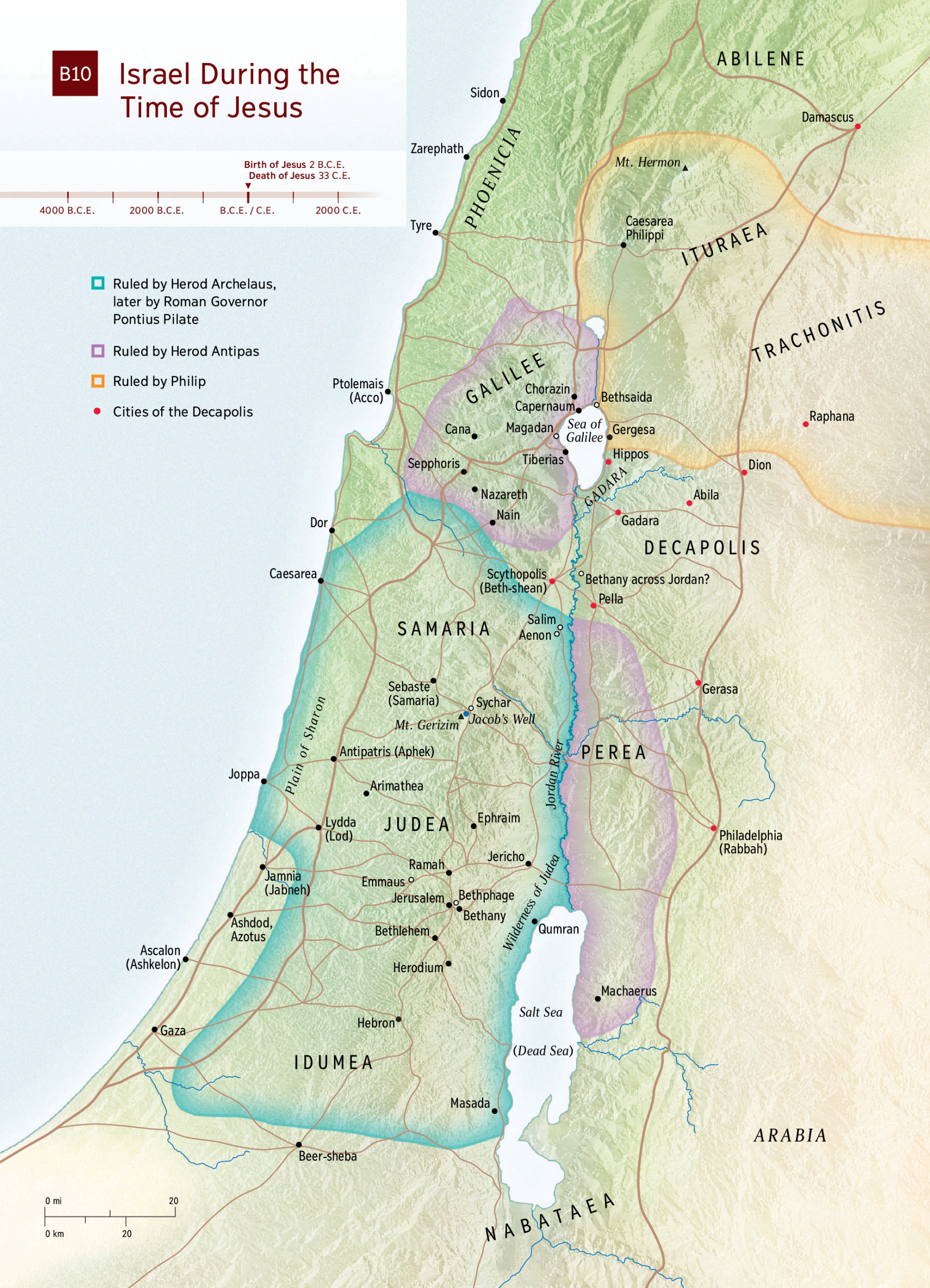
 Again, departing from the region of Tyre and Sidon, He came through the midst of the region of Decapolis to the Sea of Galilee.  Then they brought to Him one who was deaf and had an impediment in his speech, and they begged Him to put His hand on him.  And He took him aside from the multitude, and put His fingers in his hears, and He spat and touched his tongue.  Then, looking up to heaven, He sighed, and said to him, "Ephphatha," that is, "Be opened."  Immediately his ears were opened, and the impediment of his tongue was loosed, and he spoke plainly.  Then He commanded them that they should tell no one; but the more He commanded them, the more widely they proclaimed it.  And they were astonished beyond measure, saying, "He has done all things well.  He makes both the deaf to hear and the mute to speak."  Again this story shows Jesus avoiding the religious rulers -- leaving from the northern Gentile region of Tyre and Sidon, He comes through the Decapolis to the Sea of Galilee, a longer and round-about route, avoiding Galilee proper (map).  The Decapolis was a Greek-speaking region of mixed populations (the word means "ten cities"), southeast of the Sea of Galilee.  My study bible says that the fact that He sighed is a sign of divine compassion for the sufferings of our fallen human nature.  He sets the example of humility and its value -- that we mustn't seek acclaim or praise when we do good to others.  Of course, this remains an essential element of His ministry; He does not seek the fame He receives; in fact in this reading and throughout the ministry He avoids unnecessary conflict and misunderstanding in order to complete His mission properly in the face of those whose expectations of the Christ are false.  Theophylact, however, adds a comment that those who disobey Christ in this situation form a good example -- that we should proclaim those who have done good to us even if they do not want us to.

Jesus' compassion is on display through all that He does.  In yesterday's reading, we may observe how He defends His own disciples from the criticism of the scribes and Pharisees.  In today's reading, although He tells the Syro-Phoenician woman, "Let the children be filled first, for it is not good to take the children's bread and throw it to the little dogs,"  He relents with her persistence.  The story is striking in that it is precisely because she speaks back within the same vein as His own image -- that "even the little dogs under the table eat the children's crumbs," that her daughter is healed from the demon.  I think it's critical, also, that we note that it's in a category of rather extraordinary healing reflecting the faith of the one who requested it:  like the centurion, it's a healing done by distance.  In the context of the Gospels and other healings we observe by Jesus, this reflects her great faith as well as her compassion and love for her daughter.  It is faith that makes the connection with Christ's power, and compassion that is a kind of mutual language with Christ.  In the second healing, as my study bible pointed out, His sigh gives us a key to His compassion.  We note that Jesus takes the man away from the multitude for this healing.   In other readings, that is an indication of the presence of those who don't believe.  Furthermore, since this episode is recording, we can assume that at least some of His disciples were also present when the man was taken aside, and they are the witnesses to these events.  It reflects again Christ's careful guarding of faith in order for His power to be most effective -- and this is an extraordinary healing.  As the text also indicates, His emphasis on faith is not for His fame nor self-aggrandizement in any form.  It is because of His compassion that He shares His power with human beings, "implanting" this divine reality, this presence of the Kingdom, where it will be truly shared, respected, and understood -- in those who possess faith.  It's important to note that compassion doesn't cover abuse nor disrespect to what is holy.  Rather, faith ensures an understanding of the reality of the Kingdom.  It is Christ who taught His disciples, "Do not give what is holy to the dogs; nor cast your pearls before swine, lest they trample them under their feet, and turn and tear you in pieces" (Matthew 7:6).  We discern the things we love, and that which we put our faith into.  We are also called to discern the value of His grace and love.   In today's reading, the Syro-Phoenician woman knows the great value even of the children's crumbs.


Monday, January 31, 2011

Yes, Lord, yet even the little dogs under the table eat from the children's crumbs

From there He arose and went to the region of Tyre and Sidon. And He entered a house and wanted no one to know it, but He could not be hidden. For a woman whose young daughter had an unclean spirit heard about Him, and she came and fell at His feet. The woman was a Greek, a Syro-Phoenician by birth, and she kept asking Him to cast the demon out of her daughter. But Jesus said to her, "Let the children be filled first, for it is not good to take the children's bread and throw it to the little dogs." And she answered and said to Him, "Yes, Lord, yet even the little dogs under the table eat from the children's crumbs." Then He said to her, "For this saying go your way; the demon has gone out of your daughter." And when she had come to her house, she found the demon gone out, and her daughter lying on the bed.

Again, departing from the region of Tyre and Sidon, He came through the midst of the region of Decapolis to the Sea of Galilee. Then they brought to Him one who was deaf and had an impediment in his speech, and they begged Him to put His hand on him. And He took him aside from the multitude, and put His fingers in his ears, and He spat and touched his tongue. Then looking up to heaven, He sighted, and said to him, "Ephphatha," that is, "Be opened." Immediately his ears were opened, and the impediment of his tongue was loosed, and he spoke plainly. Then He commanded them that they should tell no one; but the more He commanded them, the more widely they proclaimed it. And they were astonished beyond measure, saying, "He has done all things well. He makes both the deaf to hear and the mute to speak."

- Mark 7:24-37

On Saturday, our previous reading told of an encounter between Jesus and some of the leadership of the temple, the Pharisees and scribes. These men were complaining about Jesus' disciples, that they did not perform the ritual purification of washing. They ask Jesus why His disciples do not hold to the tradition of the elders; this is an oral tradition of interpretations of the Law. Jesus replies that they are hypocrites, for this oral tradition is upheld in instances where it in fact prevents the purposes of the Law of Moses from being carried out. He teaches the crowds that "there is nothing that enters a man from outside which can defile him; but the things which come out of him, those are the things that defile a man." Later, he explains in private to His disciples that it is not food - what goes into a man - that defiles, but rather what comes out. That is, the things that come from the heart can pollute such as evil thoughts, envy, "adulteries, murders, thefts, covetousness, wickedness, deceit, lewdness, an evil eye, blasphemy, pride, foolishness." See This people honors Me with their lips, but their heart is far from Me.

From there He arose and went to the region of Tyre and Sidon. In Mark's gospel, Jesus repeatedly travels from Jewish to Gentile territory, and back again, and we are given His encounters in each. Now Jesus is in Gentile territory again. These are Gentile cities on the coast of Palestine.

And He entered a house and wanted no one to know it, but He could not be hidden. It's really so fascinating that Jesus tries a number of times to escape the crowds that follow Him everywhere. He has tried to get away with the apostles, to rest and speak with them, just before the feeding of the five thousand. After this event, He withdrew to the mountain to pray alone, but we learned that His disciples needed Him, prompting another astonishing miracle. Yet again, in today's reading, Jesus goes into a home and didn't want anyone to know of Him, but "He could not be hidden." The mysterious Messiah would be elusive, but try as He might, He cannot be hidden. Everyone seeks Him out, everywhere - even here in Gentile territory.

For a woman whose young daughter had an unclean spirit heard about Him, and she came and fell at His feet. The woman was a Greek, a Syro-Phoenician by birth, and she kept asking Him to cast the demon out of her daughter. This story appears elsewhere in the Gospels, and I quite love it. This Greek-speaking woman pursues Jesus for a purpose - she wants healing for her daughter. The sense in which she asks is kind of like a "special request" or a question posed from a student to a teacher. She needs an answer.

But Jesus said to her, "Let the children be filled first, for it is not good to take the children's bread and throw it to the little dogs." This seems like an extraordinarily insulting and harsh answer. Perhaps it reflects His growing tiredness during this ministry where He is seemingly forever seeking rest, to elude the crowds that follow Him everywhere. But if we think more closely about it, there are several other things going on - in this particular answer. Women play such a great role in all the Gospels, and here is no exception. This is unusual, first of all, for a Gentile woman to be speaking to a Jewish man at all - especially in such a forward way! She's pushy! Secondly, she asks as if she is in personal relationship with Him, like a favored student, a pupil who's been chosen by a master to be a disciple. So when He says, "let the children be filled first," it's understood that He's speaking of the "children of Israel," to whom He has first been sent. But there is more here. Jesus' answer, while seemingly insulting, is also a little sly and subtle. He doesn't send her away. Rather, in some way, He goads her. She's already pestering Him; in this sense we might think that she is like a small dog, under the table, begging to be fed.

And she answers likewise, immediately catching on to the metaphor: And she answered and said to Him, "Yes, Lord, yet even the little dogs under the table eat from the children's crumbs." She's not one of the ones sitting at the table with the other "students," but she is there, and she also wishes to be fed and to be heard. My study bible says, "That the mother kept asking Him for her daughter's deliverance teaches perseverance in prayer. Jesus resists her, not to make her persuade Him, but to test her faith. Such persistence the Lord seeks from all." She's not put off at all, rather she answers back!

Then He said to her, "For this saying go your way; the demon has gone out of your daughter." And when she had come to her house, she found the demon gone out, and her daughter lying on the bed. He rewards her persistent behavior. In a commentary by Chrysostom, he notes that Jesus must have intended all along to help the woman, otherwise the healing of the daughter would not have happened. But her great persistence, her deep desire for something from Christ - a healing for her daughter - is something special and rewarded and desired. Chrysostom writes that Jesus goes out of His borders (as a Jew in Gentile territory) and so does she (as a non-Jewish woman who speaks up to Him), and so they come together in relationship. This is the image of prayer; it is relationship and communion. It is also a sort of "wrestling with God" as appears earlier in Scripture. In the best Jewish tradition, this woman does the same. Jacob was told, "Your name will no longer be Jacob, but Israel, because you have struggled with God and with humans and have overcome." But note, this struggle is for blessing and communion and a recognition of the mastery of God; likewise this woman asks for the Master of all to command the enemy, a demon, out of her daughter. She becomes a subject of this kingdom, and this she begs for her daughter.

Again, departing from the region of Tyre and Sidon, He came through the midst of the region of Decapolis to the Sea of Galilee. The Decapolis is again a Greek-speaking region, and this is home territory to Jesus, near the Sea of Galilee.

Then they brought to Him one who was deaf and had an impediment in his speech, and they begged Him to put His hand on him. And He took him aside from the multitude, and put His fingers in his ears, and He spat and touched his tongue. Then looking up to heaven, He sighted, and said to him, "Ephphatha," that is, "Be opened." Immediately his ears were opened, and the impediment of his tongue was loosed, and he spoke plainly. My study bible says here: "Jesus heals in various ways. Sometimes He speaks a word, sometimes He commands people to act (take up a bed; wash in a pool), sometimes He touches people. Here He takes a man aside for a private and unusual act of healing. The ways of God at times do not make sense to us, not because He is illogical, but because His nature transcends our capacity to understand." Again, in this reading, we can't help but notice that at issue here is the speaking ability of a man, the quality of his being able to communicate and to express himself. As it was with the woman above, her outspokenness was encouraged and even goaded, and rewarded by Christ. So it is here that He seeks to open the mouth of a man, with an "impediment" -- perhaps he stutters, at any rate he cannot express himself, and it is also connected to his hearing. The language of the Gospel says that this is a kind of chaining or bondage, and his tongue is "unloosed" as if it is set free from bondage. My study bible also adds, "Looking up to heaven is a sign of intimacy with the Father in prayer. He sighed out of deep compassion for the man's pitiful condition." Jesus turns to God the way the Syro-Phoenician woman has turned to Him. There are many levels of prayer and communion that are happening in today's reading, and layers of freedom, of unleashing, throughout.

Then He commanded them that they should tell no one; but the more He commanded them, the more widely they proclaimed it. And they were astonished beyond measure, saying, "He has done all things well. He makes both the deaf to hear and the mute to speak." Here is the irony: the man's tongue is "loosed" and his mouth and ears are "opened" but we are back in Jewish territory, and Jesus wants the man and His friends to tell no one. "But the more He commanded them, the more widely they proclaimed it." To make the deaf to hear and the mute to speak is quite literally an attribute of the Messiah, straight from prophecy. My study bible says, "Here Jesus' attempt to keep His messianic identity a secret is foiled by the people's enthusiasm. The gospel is so powerful that it simply cannot be contained."

So, in today's reading, we receive layers of communication and freedom. Borders are crossed, boundaries are dropped. The woman is free to speak to Jesus, even to answer Him back in a quite snappy way while she demands help for her daughter and pesters Him for what He has to offer to the house of Israel: the healing and release from the bondage of demons. The man's mouth and tongue are "loosed" and his ears are "opened" so that he, too, can speak and communicate. His friends are astonished, and contrary to Jesus' words to them, they spread this great Messianic secret about Jesus. All in all the reading is about freedom - freed from bondage we become in communion with our Lord, we speak, we plead, we wrestle. As individuals, we come to Him, and He gives us our freedom to be ourselves in His recognition of our need, and His bringing us closer to God. Christ, if we pay attention to these Gospels, frees us and empowers us. In Him, we are freed to become ourselves, in the image in which we are created. His mastery is our liberation; He gives us who we are, we are restored and out of bondage and slavery and impediment. This is the message of this Gospel. Can you hear it? Can you wrestle with Him for yourself, or are you a slave to your own impediment? Clearly, He desires us all to come to Him. He declares to us all "Ephphatha" - "be opened!"